The average person wastes 15 minutes a week hunting for matching socks — that's 13 hours a year lost to a single messy drawer. One set of drawer dividers, installed in under five minutes, eliminates the problem permanently.
To organize socks and underwear with drawer dividers, measure your drawer depth and width, then install adjustable dividers to create dedicated zones — one for folded socks, one for underwear, one for bras or specialty items. Bamboo expandable dividers grip drawer walls without tools and resize as your needs change.
Measure First — Everything Else Depends On It
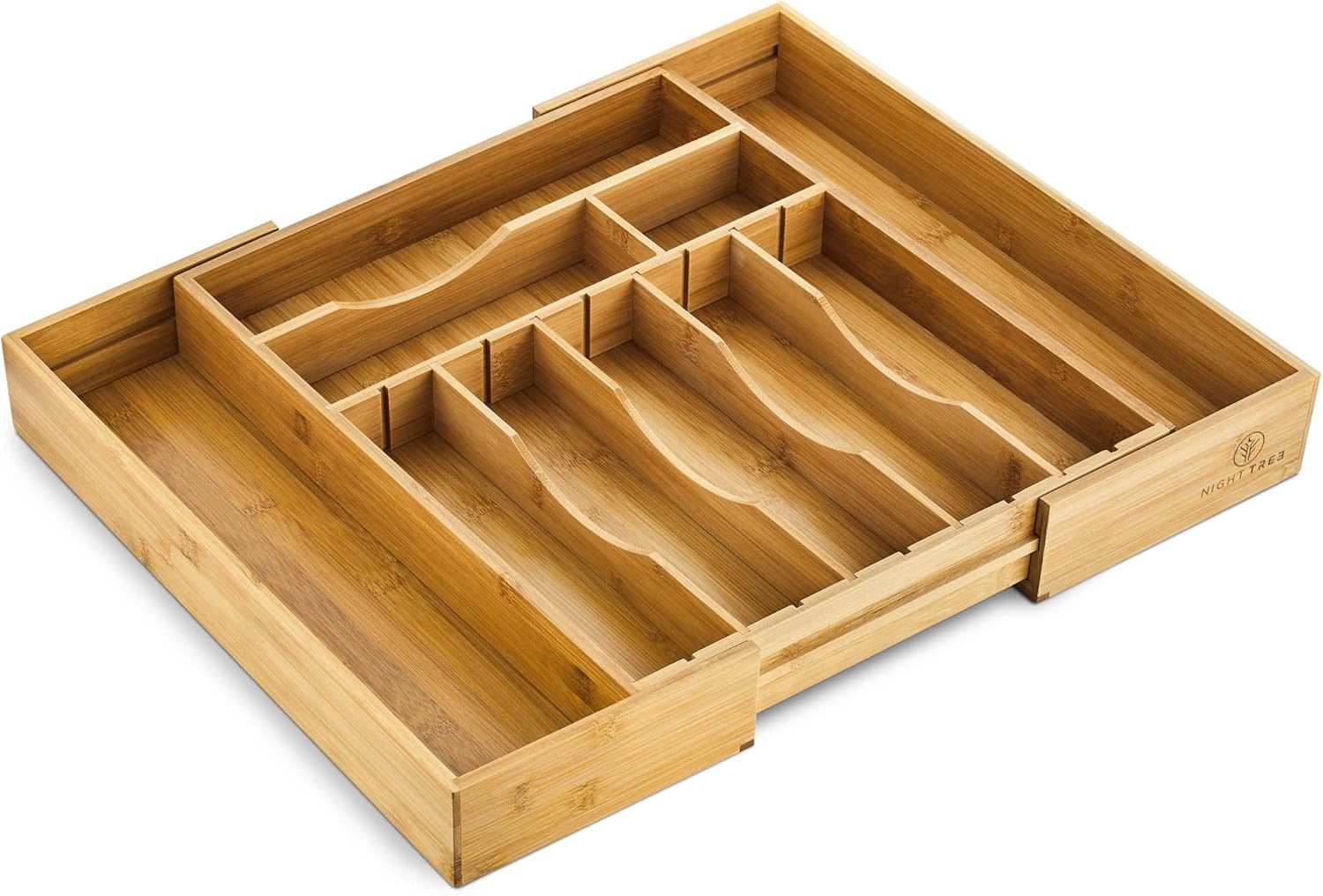
Before you buy anything, pull the drawer all the way out and measure its interior width, depth, and height. Most standard dresser drawers run 18–22 inches wide and 12–16 inches deep, but height varies wildly — some are a slim 3 inches, others a generous 6. You need dividers that fit the height snugly, or clothes will slide underneath them and defeat the whole purpose. The Night Tree Bamboo Expandable Drawer Organizer extends from roughly 13 to 22 inches, which covers the majority of adult dressers without any cutting or gluing. Write your measurements on your phone before you shop — it takes 90 seconds and saves a return trip.
The Right Zone Layout for Socks vs. Underwear
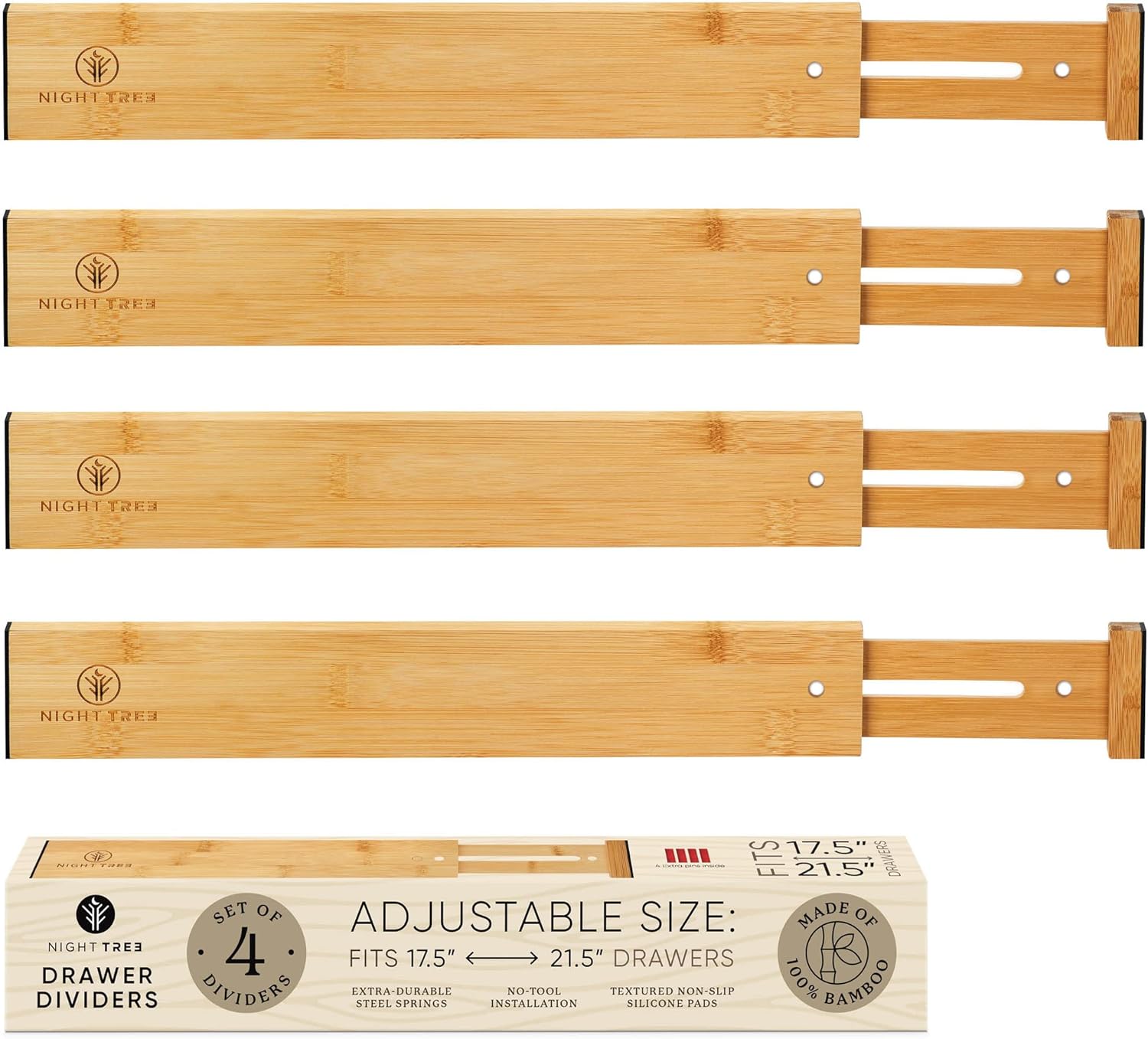
Think of your drawer as real estate: assign every category a fixed address and never let it migrate. A practical three-zone split works for most people — one section for everyday socks folded using the flat 'file fold' method (standing upright so you see every pair at a glance), one section for underwear stacked vertically, and a narrow third section for athletic no-shows or liner socks that get lost elsewhere. Vertical filing, popularized by professional organizers, can increase drawer capacity by up to 40% compared to horizontal stacking because you eliminate the 'dig-to-the-bottom' problem. With the Night Tree Bamboo Drawer Dividers (Set of 4), you get four individual panels you can position anywhere across the drawer, giving you full control over section widths rather than forcing your wardrobe into a fixed grid. Bras deserve their own horizontal section at the back, cups nested and straps tucked in, so underwire doesn't warp.
Bamboo vs. Plastic Dividers — An Honest Comparison
Plastic adjustable dividers cost $6–$12 a set and feel fine for the first six months, but the spring-tension mechanism weakens over time, they crack in dry climates, and they look cheap in an open drawer. Bamboo dividers — like the Night Tree Bamboo Drawer Dividers (Set of 4) — run closer to $20–$28 but are genuinely rigid, don't bow under the weight of a full load of laundry, and the natural grain actually looks good if you leave the drawer open. Bamboo is also one of the fastest-renewing materials on Earth, reaching harvestable maturity in 3–5 years versus 20–80 for hardwood, so the eco-math is real, not marketing spin. The honest trade-off: bamboo dividers are slightly less infinitely adjustable than spring-loaded plastic once installed, so getting your measurements right upfront matters more.
Step-by-Step: Installing and Loading Your Dividers
Empty the drawer completely — this is non-negotiable, because you need to see the full floor space and you'll want to wipe it down anyway. Place your dividers dry first, without committing to positions, and do a test-fit with a sample of folded clothes to confirm the section widths actually work for your specific items. Once you're satisfied, press expandable bamboo dividers firmly against the side walls so the tension holds them in place — no adhesive needed. Load socks file-folded on their sides in one section, underwear vertically in the next, and any overflow items (swimwear, compression socks, travel-sized toiletry backups) in the last section. Reassess every season: a summer drawer and a winter drawer have genuinely different needs, and spending five minutes reconfiguring in September pays off for the next six months.
What to Do with the Overflow You Just Discovered
Almost everyone who organizes a sock-and-underwear drawer finds they own more than the drawer can hold — the audit is part of the process. The rule most professional organizers use in 2026 is simple: if a pair hasn't been worn in 12 months and isn't seasonal, it goes. Once you've edited down, truly excess items like holiday-themed socks or travel underwear can be stored in a small lidded bin on a shelf, labeled clearly. If your bigger issue is a chaotic kitchen junk drawer rather than a bedroom dresser, the same expandable bamboo approach transfers directly — the Night Tree Bamboo Expandable Drawer Organizer works equally well for utensils, batteries, and craft supplies as it does for clothing. A tidy system in one room tends to create momentum: most people who fix their sock drawer reorganize at least two other spaces within the same week.
Frequently Asked Questions
How many drawer dividers do I need for socks and underwear?
Most single-person drawers need 2–4 dividers to create adequate zones. A set of 4 gives you maximum flexibility — use 2 for a simple two-section split or all 4 for a finely segmented drawer that separates everyday socks, athletic socks, underwear, and bras into their own clearly defined spaces.
Will bamboo drawer dividers work in any dresser?
Bamboo expandable dividers fit most standard adult dressers with interior widths of 13–22 inches. Measure your drawer's interior width before purchasing. They work in wood, laminate, and even painted drawers — the tension grip holds without scratching surfaces, and no tools or adhesives are required.
What's the best folding method for socks when using drawer dividers?
The file-fold method — folding each pair flat and standing them upright on their edge — is the most space-efficient approach. You can see every pair at a glance without disturbing others, and a standard section created by one divider can hold 15–20 pairs this way versus 8–10 when stacked horizontally.
Ready to upgrade?
Ready to end the sock avalanche for good? The Night Tree Bamboo Drawer Dividers (Set of 4) install in minutes, fit most standard dressers, and are built from sustainably harvested bamboo that will outlast every flimsy plastic alternative you've tried before.