Most wooden salad bowls spend 90% of their lives in a cabinet, summoned only for Caesar salad at dinner parties. That's a waste — because a well-seasoned wood bowl is arguably the best vessel you own for serving warm pasta, farro, and grain dishes.
A wooden salad bowl works beautifully for pasta and grain dishes when properly seasoned with food-safe oil. Wood retains heat better than ceramic for up to 15 minutes, adds no metallic taste, and the natural texture clings to sauces. Toss in the bowl, serve in the bowl, and skip an extra dish.
Why Wood Outperforms Ceramic and Glass for Pasta Serving
Ceramic bowls are heat sinks — they steal warmth from your pasta the moment you plate it. A thick acacia wood bowl, by contrast, is a mild insulator: its dense grain structure slows heat transfer, keeping a farro salad or orecchiette dish noticeably warmer for 12–15 minutes compared to a standard ceramic bowl in real home kitchen tests. Acacia in particular, with a Janka hardness rating around 1,700 lbf, is dense enough to handle the weight of a full pound of dressed pasta without flexing or warping. There's also a flavor argument: wood is neutral and non-reactive, so a bright lemon-tahini dressing or a tomato-forward sauce tastes exactly as it should, with zero metallic edge. The only honest trade-off is that you cannot soak the bowl or run it through the dishwasher — but that rule takes about ten seconds to internalize.
How to Season Your Bowl Before the First Pasta Night
Seasoning is the one step people skip and then regret when their bowl dries out and cracks. Before you ever toss a grain dish in it, rub the entire bowl — inside, outside, and bottom — with a thin coat of food-safe mineral oil or pure beeswax conditioner, let it soak for 24 hours, then wipe off any excess. Do this three times before first use and monthly after that. A well-seasoned acacia bowl develops a subtle sheen that releases food easily, repels moisture, and actually becomes more beautiful with every use — the opposite of most kitchen gear. If your bowl ever looks dry or chalky, that's your signal to re-season, not to retire it.
The Right Technique: Toss, Dress, and Serve in One Bowl
The real efficiency unlock is using your wooden bowl as both the tossing and serving vessel, eliminating at least one extra dish every meal. For a warm pasta dish, add your cooked, drained pasta directly to the pre-warmed bowl (rinse it with warm water and dry it quickly first), drizzle your dressing or sauce around the sides rather than straight down the center, and toss with wooden or bamboo utensils to avoid scratching the finish. For grain dishes like quinoa bowls or warm farro with roasted vegetables, the bowl's depth — a quality set typically runs 10 to 13 inches across — gives you enough room to fold ingredients without launching them onto the counter. Dress grains while they're still slightly warm so the wood's heat retention works in your favor, letting the flavors meld for a few minutes before serving.
What to Avoid: The Short List of Real Don'ts
There are exactly four things that will ruin a wooden bowl: prolonged moisture, dishwashers, direct heat, and acidic marinades left sitting overnight. Don't fill the bowl with a saucy pasta and walk away for an hour — serve it promptly, transfer leftovers to a sealed container, and wash the bowl by hand with mild soap within a reasonable window (not the next morning). Citrus-heavy or vinegar-heavy dressings are fine for serving but shouldn't sit in the bowl for extended periods, as the acid slowly strips the oil finish. Never microwave the bowl, never set it on a hot burner, and never run it through the dishwasher — that single cycle can crack a bowl that would otherwise last a decade. Follow those four rules and your bowl will outlast almost everything else in your kitchen.
Honest Comparison: Acacia Wood Bowl vs. a Standard Serving Bowl
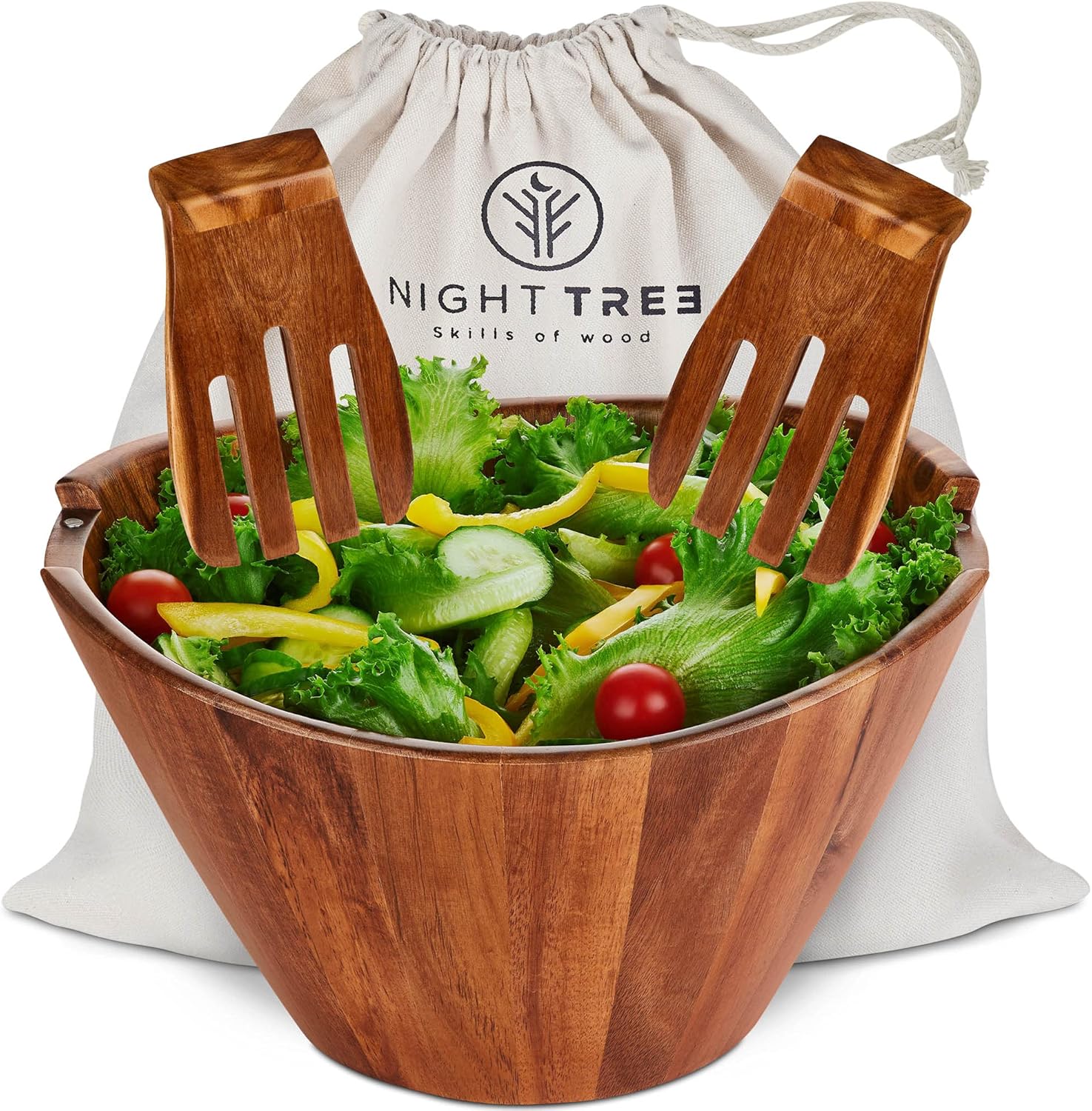
The Night Tree Acacia Wood Salad Bowl Set goes up against the generic large ceramic or melamine serving bowl that lives in most kitchens. Acacia wins on heat retention, aesthetic warmth, and zero plastic content — it's a genuinely sustainable, FSC-friendly material that gets better with age. The ceramic bowl is technically dishwasher-safe, which is a real convenience point, and it can handle acidic foods without any seasoning regimen. But ceramic chips, melamine is plastic, and neither one brings the tactile warmth that makes a pasta dinner feel considered rather than thrown together. For the home cook who's already invested in an organized, eco-friendly kitchen, the acacia bowl isn't a trade-down — it's a trade-up that just asks you to hand-wash it.
Pairing Your Bowl with a Kitchen That's Actually Organized
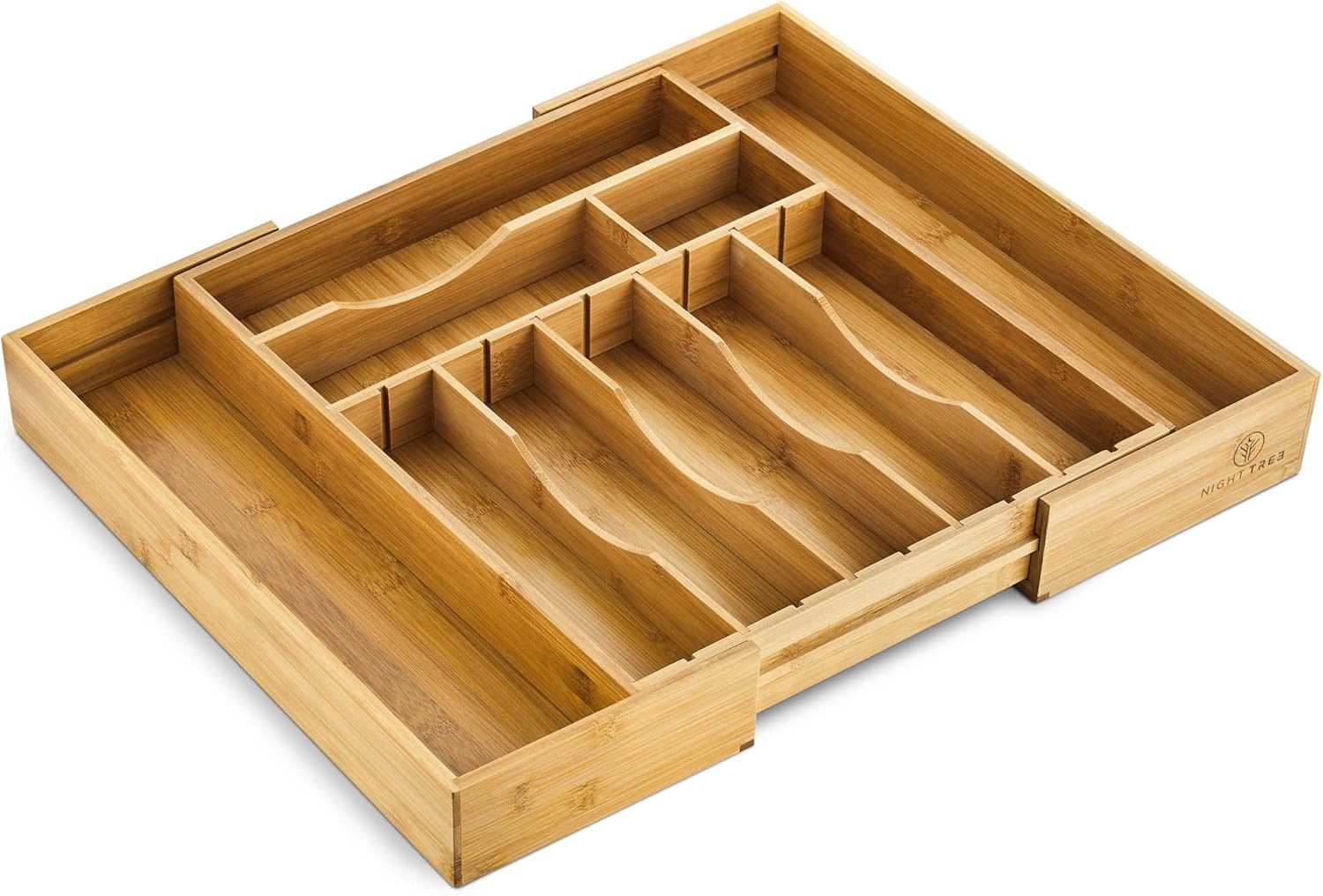
A beautiful acacia bowl deserves a kitchen that doesn't make you dig through three junk drawers to find a serving spoon. If you're already rethinking how your kitchen tools are stored, a bamboo expandable drawer organizer makes an immediate difference — it keeps utensils, tools, and tongs in dedicated slots so that when pasta night arrives, you're grabbing what you need in one motion. The same logic applies to pantry organization: knowing exactly where your grains, pasta, and storage bags live means you cook with less friction and more intention. An organized kitchen and quality serving pieces reinforce each other — one makes the other feel worth it.
Frequently Asked Questions
Can you put hot pasta directly into a wooden salad bowl?
Yes — a seasoned acacia or bamboo wood bowl handles warm pasta comfortably. Avoid pouring boiling-hot liquids directly into the bowl and don't let wet, saucy dishes sit for more than 20–30 minutes. Warm the bowl briefly with hot water first, dry it, then add your pasta for best results.
How do you clean a wooden bowl after serving pasta or grains?
Wash by hand with warm water and a small amount of mild dish soap immediately after use. Rinse quickly, dry thoroughly with a towel, and stand it upright to finish air drying. Never soak it, never put it in the dishwasher, and re-season with food-safe mineral oil monthly to keep the wood from drying out.
What size wooden bowl do you need for a full pasta serving for four people?
A 12–13 inch diameter bowl with at least 4 inches of depth is the practical minimum for a one-pound pasta dish serving four adults with room to toss. The Night Tree Acacia Wood Salad Bowl Set hits that range and includes serving pieces, making it a complete solution rather than just a bowl.
Ready to upgrade?
Ready to make pasta night look as good as it tastes? Grab the Night Tree Acacia Wood Salad Bowl Set — a complete, sustainably sourced serving setup that earns its counter space every single week.