The average American household owns 80 kitchen items they can never find — not because the kitchen is too small, but because the shelves inside it are doing absolutely nothing useful. Fix the shelves, and you fix the whole room.
The smartest kitchen shelf organizers in 2026 combine adjustable sizing, sustainable materials like bamboo or acacia wood, and modular stacking. Prioritize expandable drawer dividers, vertical plate racks, and dedicated bag storage to reclaim dead cabinet space — most kitchens gain 30–40% more usable storage without adding a single new cabinet.
1. Expandable Drawer Organizers — The Single Best Investment You'll Make
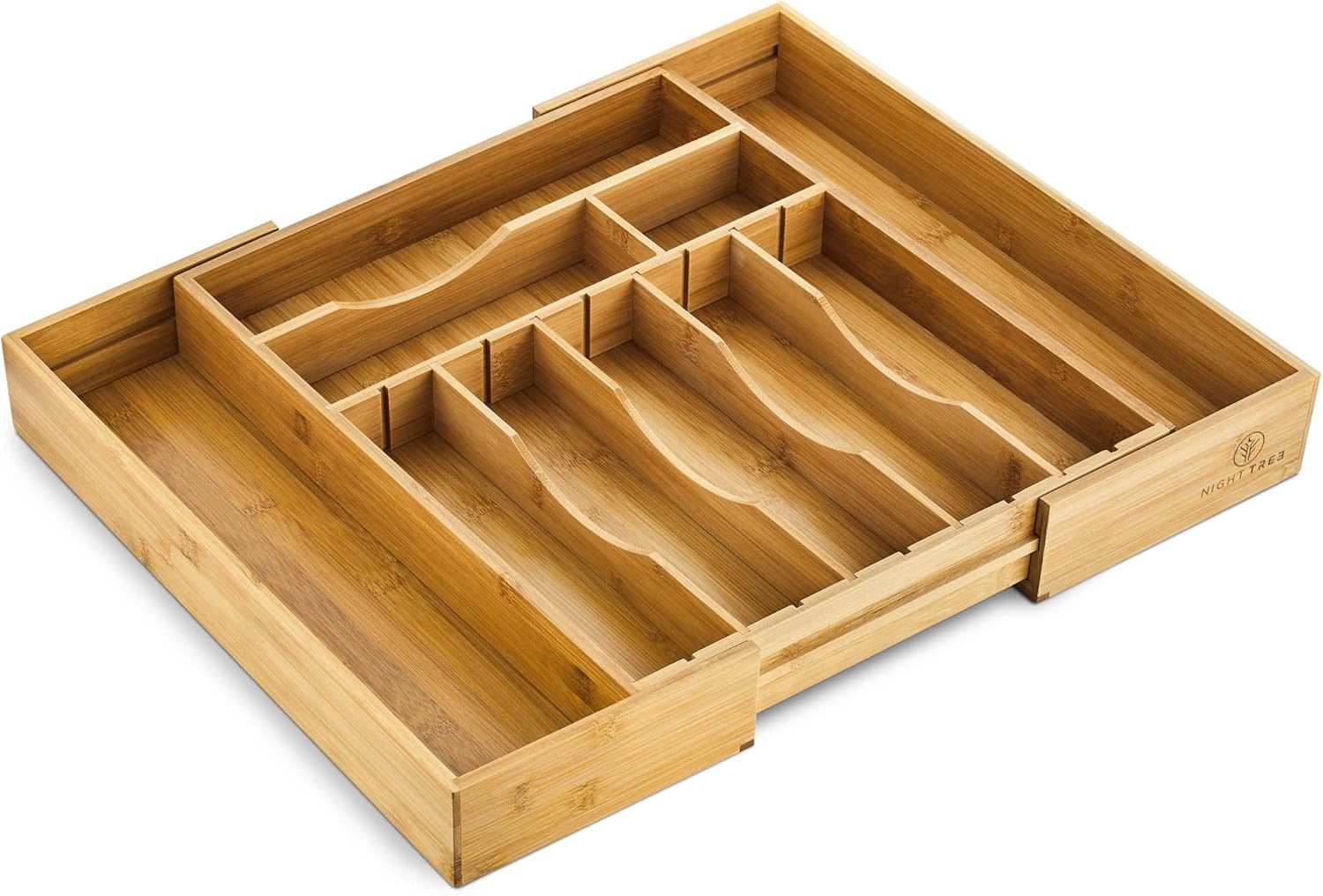
If you do only one thing to your kitchen in 2026, install an expandable drawer organizer. Unlike fixed plastic trays that leave awkward gaps, an expandable design stretches to fit drawer widths from roughly 13 to 21 inches, leaving zero dead space at the sides. The Night Tree Bamboo Expandable Drawer Organizer does exactly this — it's made from sustainably harvested bamboo, so it won't warp from steam the way MDF inserts do. At roughly $35–45, it undercuts most stainless-steel competitors while looking far better on an open drawer. One organizer, properly sized, eliminates the 'dump-and-dig' habit that wastes an average of four minutes every morning.
2. Drawer Dividers for Junk-Drawer Redemption
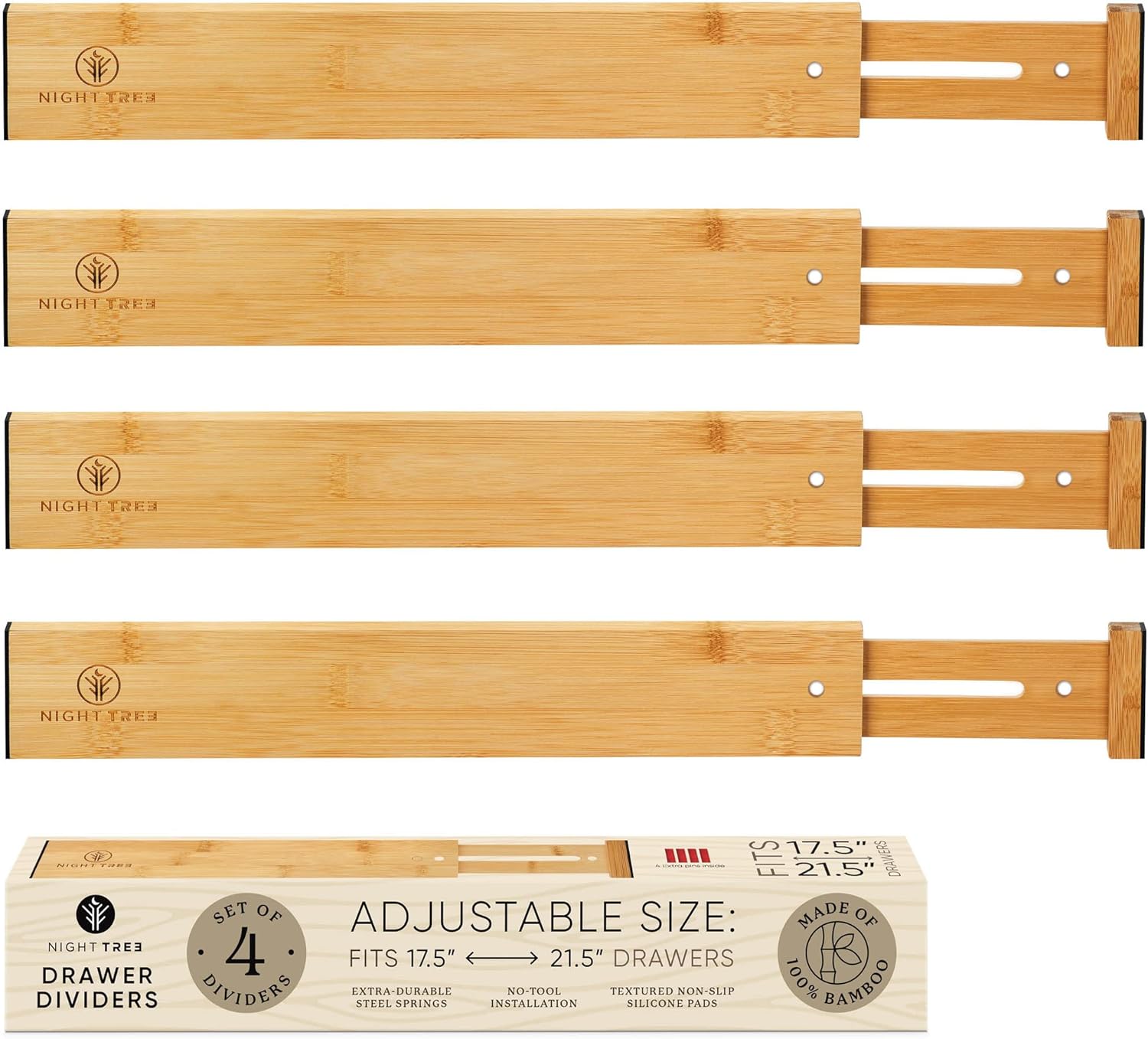
The junk drawer is a myth — it's actually a miscategorized utility drawer that never got dividers. A set of four interlocking dividers creates hard zones for batteries, twist ties, scissors, and takeout menus so nothing migrates. The Night Tree Bamboo Drawer Dividers (Set of 4) use a pressure-fit system that requires no tools and no adhesive, which matters when you're renting or just like the freedom to reconfigure. Bamboo is harder than most hardwoods at 1,300+ on the Janka scale, so these won't bow or splinter after a year of use. One honest caveat: if your drawer is deeper than 2.5 inches of usable height, pair these with a taller divider rail for pens and spatulas that stand upright.
3. Dedicated Ziplock Bag Storage — The Cabinet Problem Nobody Talks About
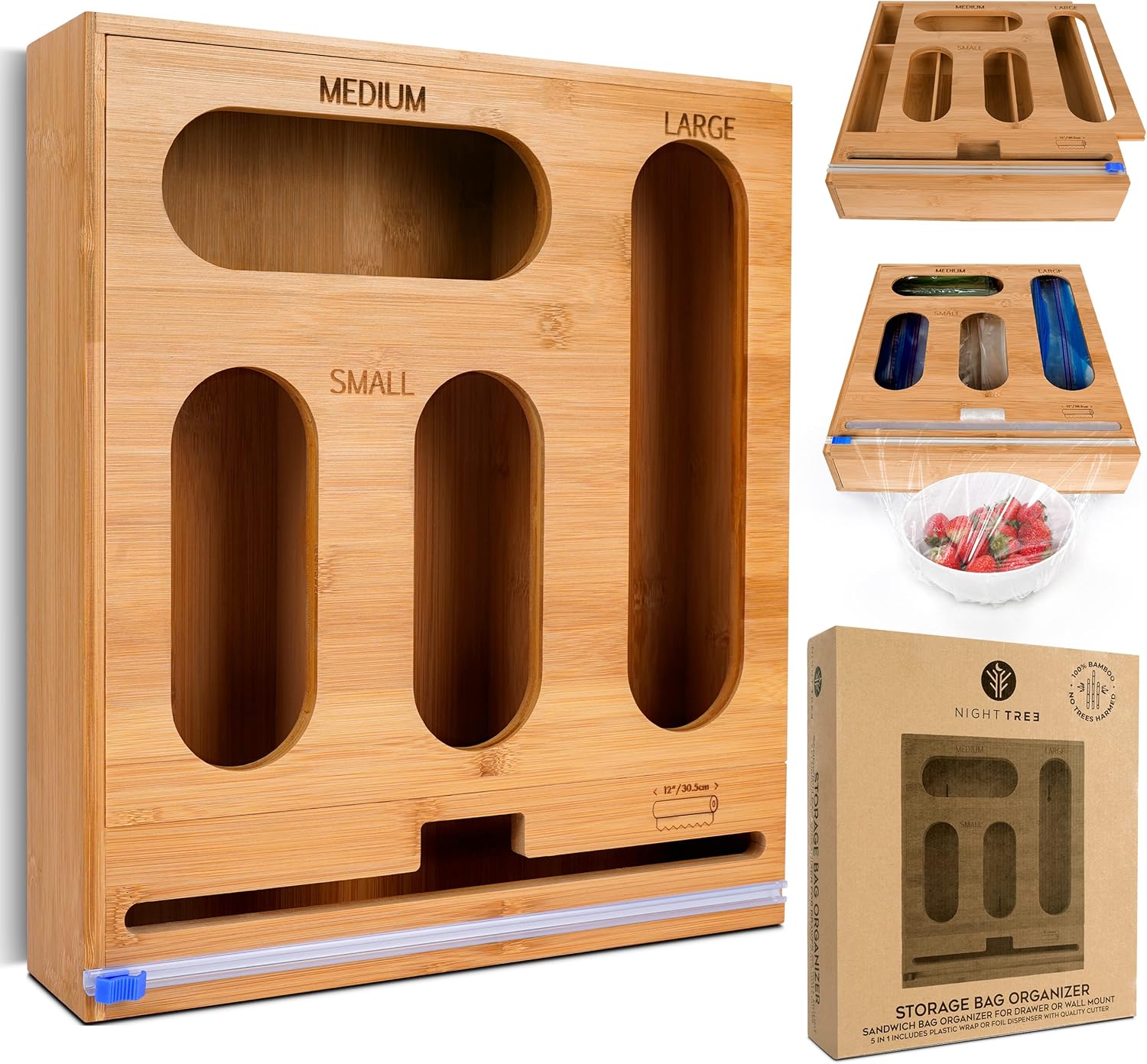
Ziploc boxes are the cockroaches of kitchen cabinets: they multiply, they scatter, and they never stay where you put them. A wall-mounted or shelf-mounted bag organizer corrals every size — sandwich, quart, gallon — into a single vertical footprint that takes up about 4 inches of cabinet depth. The Night Tree Bamboo Ziplock Bag Storage Organizer mounts inside a cabinet door or stands on a shelf, and the natural bamboo finish means it doesn't scream 'plastic utility bin' at you every time the cabinet opens. This is especially effective in kitchens under 150 square feet where every inch of cabinet real estate has a dollar value. Bonus: having bags visible and organized means you actually reuse them instead of grabbing a fresh one by default — a real sustainability win.
4. Vertical Plate Racks — Stack Up, Not Out
Stacking plates flat is the default, but it's also the slowest way to retrieve a single dinner plate without disturbing the whole tower. A vertical plate rack stores plates on edge like vinyl records, letting you pull one without touching the others. Wire chrome racks are the cheapest option ($12–18) but corrode within two years in humid kitchens. Coated steel racks last longer but still chip at contact points. For a shelf that's also visible — say, open shelving above a counter — a natural wood or bamboo option matches your kitchen aesthetic instead of fighting it. Vertical racks typically free up one full shelf tier when you eliminate the stacking pyramid, which in a standard 12-inch-deep cabinet is meaningful real estate.
5. Under-Shelf Basket Clips — Doubling Cabinet Height for Free
Most kitchen cabinets have 14–16 inches between shelves, but the items stored there average only 6 inches tall — meaning half that vertical space is pure air. Under-shelf wire baskets clip onto the shelf above and hang down, creating a second storage layer for lids, cutting boards, or spice packets without drilling a single hole. This trick costs $8–15 per basket and requires zero installation time. The trade-off: wire baskets look industrial and aren't ideal for open-shelf or display contexts. For those situations, consider a slim bamboo tray with a lip — it slides under the shelf and keeps things cohesive. This one move alone can add the equivalent of an entire cabinet shelf without any construction.
6. Turntables (Lazy Susans) for Corner Cabinets — Stop the Black Hole
Corner cabinets are where cooking oils, vinegars, and 'I forgot I owned that' items go to die. A two-tier turntable with a 12-inch diameter fits most corner cabinet depths and spins 360 degrees so nothing hides in the back. Plastic turntables are fine functionally but flex under heavy cast-iron pans — opt for bamboo or melamine-coated wood for anything holding bottles over 2 lbs. The real upgrade in 2026 is stackable turntables with a center pole: you get twice the storage in the same footprint, which is especially valuable in galley kitchens. Measure your cabinet interior diagonal before buying — corner cabinets often narrow to 9 inches at the door, so a 12-inch tray must clear that opening when spinning.
7. Pull-Out Cabinet Drawers — Retrofit Without a Renovation
A fixed cabinet shelf forces you to crouch, reach, and essentially do archaeology every time you want a pot lid. Slide-out drawer inserts mount on the existing shelf and transform it into a pull-out with 75–100 lb weight ratings — enough for cast iron. Full-extension slides (which pull 100% out, not 75%) are worth the $5–10 premium because they let you see the entire contents without any crouching. Soft-close versions add another $8 and eliminate the cabinet-slam noise that wakes everyone at 6 a.m. This is the highest-effort item on this list — expect 30–45 minutes per cabinet — but it's also the highest return, turning a frustrating deep cabinet into something you might actually enjoy using.
8. Tiered Spice Shelf Inserts — See Every Label at Once
Hunting for cumin behind a wall of identical bottles wastes time and causes duplicate purchases — Americans buy an average of $50/year in duplicate spices they couldn't find. A two- or three-tier riser positions jars at staggered heights so every label faces you simultaneously. For a cabinet shelf, a bamboo step riser (roughly 9 inches wide × 12 inches deep) fits standard 24-inch cabinet depth with room for two columns side by side. The honest trade-off here: risers work only if your spices are a consistent height — a mix of tall pepper grinders and short tin tins creates an uneven staircase that looks worse than flat storage. Standardizing to uniform spice jars and a riser is one of the most satisfying single-afternoon kitchen projects possible.
9. Pot Lid Organizers — The Most Underrated Kitchen Annoyance Fix
Pot lids are awkward, they don't stack, and they rattle every time a cabinet closes. A vertical lid holder — essentially a file organizer for cookware — stores five to eight lids on edge, sorted by size, in about 6 inches of shelf width. Adjustable-slot versions accommodate everything from a 6-inch saucepan lid to a 14-inch wok lid in the same unit. Mounted inside a cabinet door, a lid organizer frees an entire shelf. If you go the shelf-mounted route, choose one with rubber-tipped dividers so lids don't slide when the drawer opens — the $3 price difference between bare-wire and rubber-tipped versions is absolutely worth it.
10. Salad Bowl Storage — The Nesting Strategy That Works
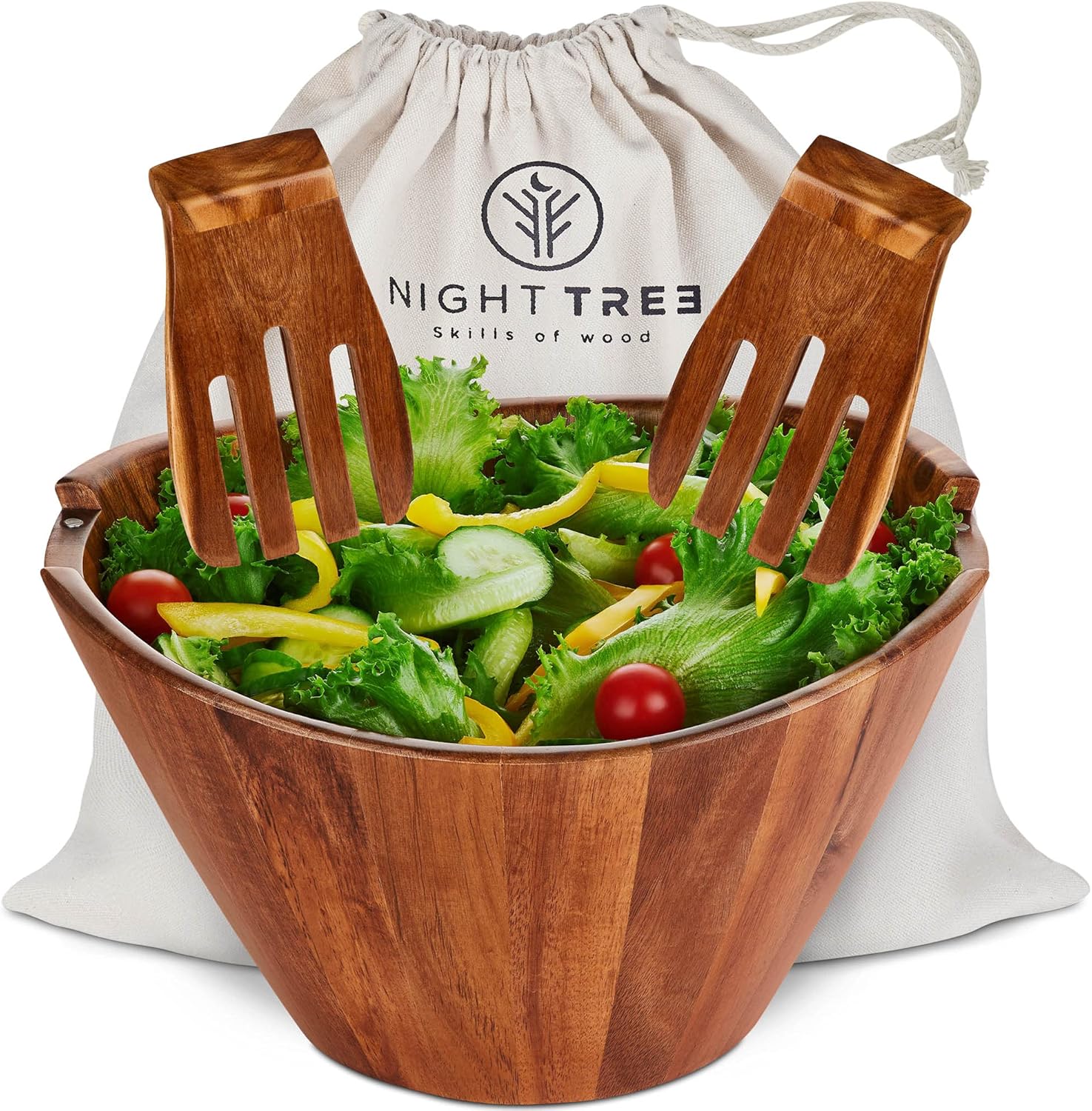
Large serving bowls are volumetric bullies: one big bowl eats a shelf. The solution is a nesting set where bowls stack inside each other in graduated sizes, collapsing four pieces into the footprint of one. The Night Tree Acacia Wood Salad Bowl Set is a rare example of a functional storage solution that also doubles as a serving centerpiece — acacia's warm grain means leaving it on an open shelf or counter is a design choice, not a storage failure. Each bowl in the set nests cleanly inside the next, so the whole set occupies the same space as a single large mixing bowl. This is particularly useful in apartment kitchens where cabinet space for entertaining pieces gets ruthlessly compressed.
11. Cabinet Door Storage — The Square Footage You Forgot You Had
The inside face of a cabinet door represents 1–2 square feet of completely unused storage in most kitchens. Over-the-door organizers with adjustable hooks or pockets can hold cutting boards, foil and wrap boxes, cleaning sprays, or a mounted bag organizer. Tension-rod versions require zero hardware; screw-mount versions hold heavier items up to 10 lbs reliably. The key measurement most people skip: check the clearance between the door's interior face and the shelf edge when the door closes — you need at least 1.5 inches or the organizer will hit the shelf and prevent the door from shutting. Most slim door organizers are designed at 1.25–1.5 inch depth for exactly this reason.
12. Honest Comparison: Bamboo vs. Plastic Shelf Organizers
Plastic organizers win on price — a basic plastic drawer tray costs $6–10 versus $25–45 for bamboo — but that's where plastic's advantages end. Plastic cracks under point-load stress (a heavy mortar, a cast-iron skillet), yellows under UV, and absorbs kitchen odors over 12–18 months of use. Bamboo, by contrast, is a grass that regenerates in 3–5 years versus 25+ for hardwood, scores harder than oak on the Janka scale, and is genuinely moisture-resistant when properly sealed. The Night Tree Bamboo Drawer Dividers (Set of 4) illustrate this trade-off clearly: more upfront cost, but they look identical on day 1,000 as day 1 — no cracks, no yellowing, no odor. If you're equipping a kitchen you plan to stay in, bamboo's lifetime cost is actually lower.
Frequently Asked Questions
What is the most effective kitchen shelf organizer for small cabinets?
For small cabinets, an expandable drawer organizer is the highest-impact first choice because it adjusts to exact cabinet width — no wasted side space. Pair it with an under-shelf basket to double vertical storage. The Night Tree Bamboo Expandable Drawer Organizer stretches from roughly 13 to 21 inches and works in both drawers and shallow cabinet shelves.
Are bamboo kitchen organizers actually better than plastic ones?
Yes, for long-term use. Bamboo is harder than most hardwoods, genuinely moisture-resistant, and doesn't yellow or crack the way plastic does after 12–18 months in a humid kitchen. Bamboo also regenerates in 3–5 years, making it one of the most renewable materials available. The upfront cost is higher ($25–45 vs. $6–10), but the lifetime cost favors bamboo in any kitchen you plan to use for more than two years.
How do I organize kitchen cabinets without buying new cabinets?
You don't need new cabinets — you need better systems inside existing ones. Start with expandable drawer organizers to eliminate dead space, add under-shelf baskets to use vertical air between shelves, install a vertical plate rack to eliminate stacking, and use a dedicated organizer for awkward items like ziplock bags and pot lids. Most kitchens recover 30–40% more usable storage space with these retrofits alone, spending $80–150 total instead of $3,000–8,000 on cabinet renovations.
Ready to upgrade?
Ready to stop losing minutes (and your mind) to chaotic drawers? The Night Tree Bamboo Expandable Drawer Organizer adjusts to fit virtually any drawer width and arrives ready to install in under five minutes — shop it at nightree.com and make tomorrow morning calmer than today's.