The average home cook opens their kitchen towel drawer 4–6 times a day — and studies on household friction show that a disorganized drawer adds nearly 3 minutes of low-grade frustration to your morning routine every single day. That's 18 hours a year lost to a drawer you could fix in 20 minutes.
To organize a kitchen towel and linen drawer with bamboo dividers, measure your drawer depth and width first, then use adjustable bamboo dividers to create 3–4 dedicated zones: everyday towels, dish cloths, specialty linens, and a small catch-all strip. Fold towels in thirds vertically so they stand upright — you'll fit 40% more and see every item at a glance.
Why Bamboo Dividers Beat Plastic Every Time
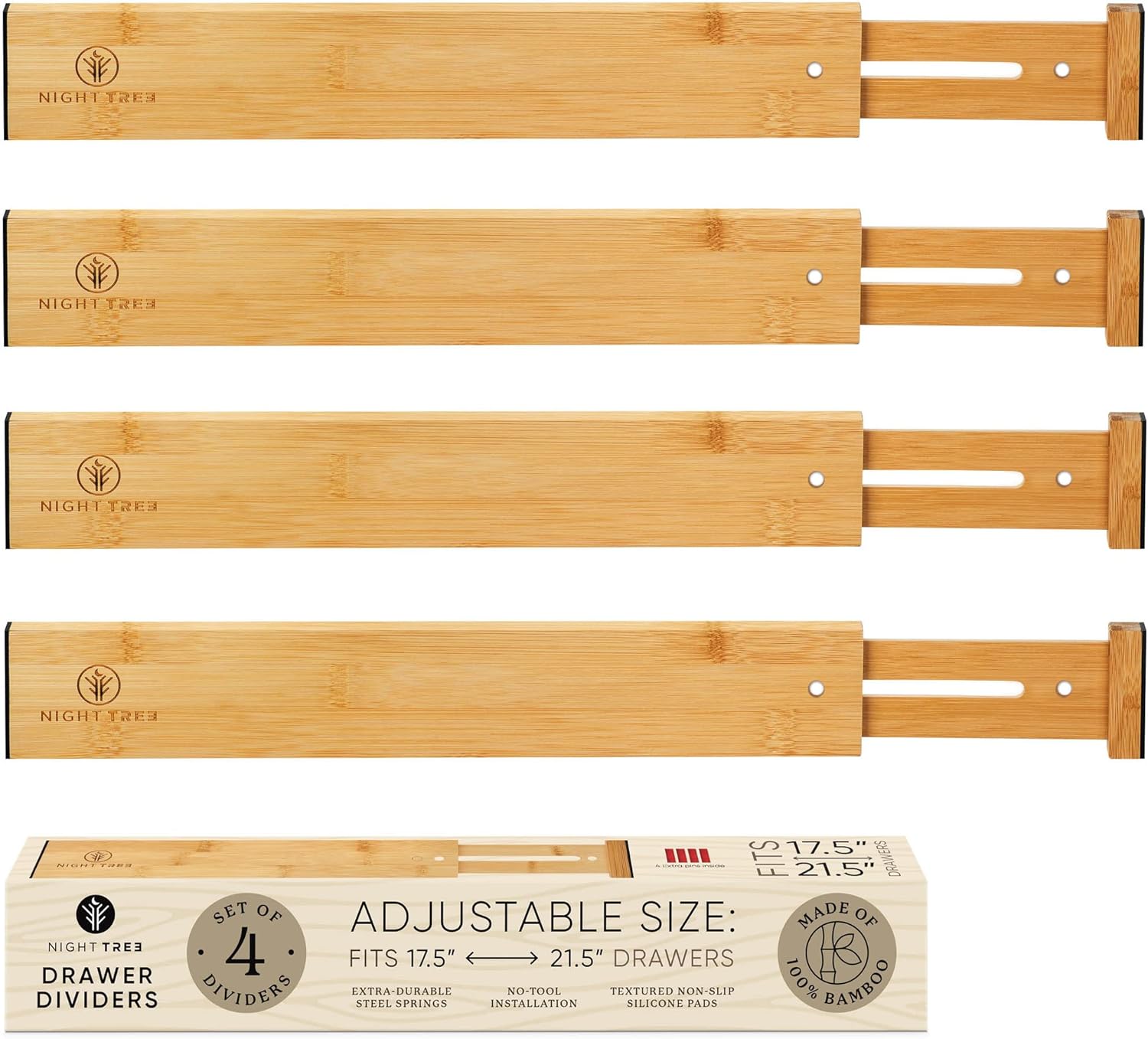
Bamboo dividers win on three counts: durability, sustainability, and aesthetics. A quality bamboo divider like the Night Tree Bamboo Drawer Dividers (Set of 4) uses Moso bamboo that's harder than most hardwoods (rated around 1,380 on the Janka scale), meaning it won't bow, warp, or crack the way plastic trays do under humidity — a real issue in kitchens near a stove or dishwasher. Plastic organizers off-gas low-level VOCs and typically landfill within 3–5 years; bamboo is compostable and carbon-negative at harvest. They also look genuinely good: the warm grain elevates a utilitarian drawer into something you're actually proud to open in front of guests.
Measure Before You Buy: The Dimensions That Matter
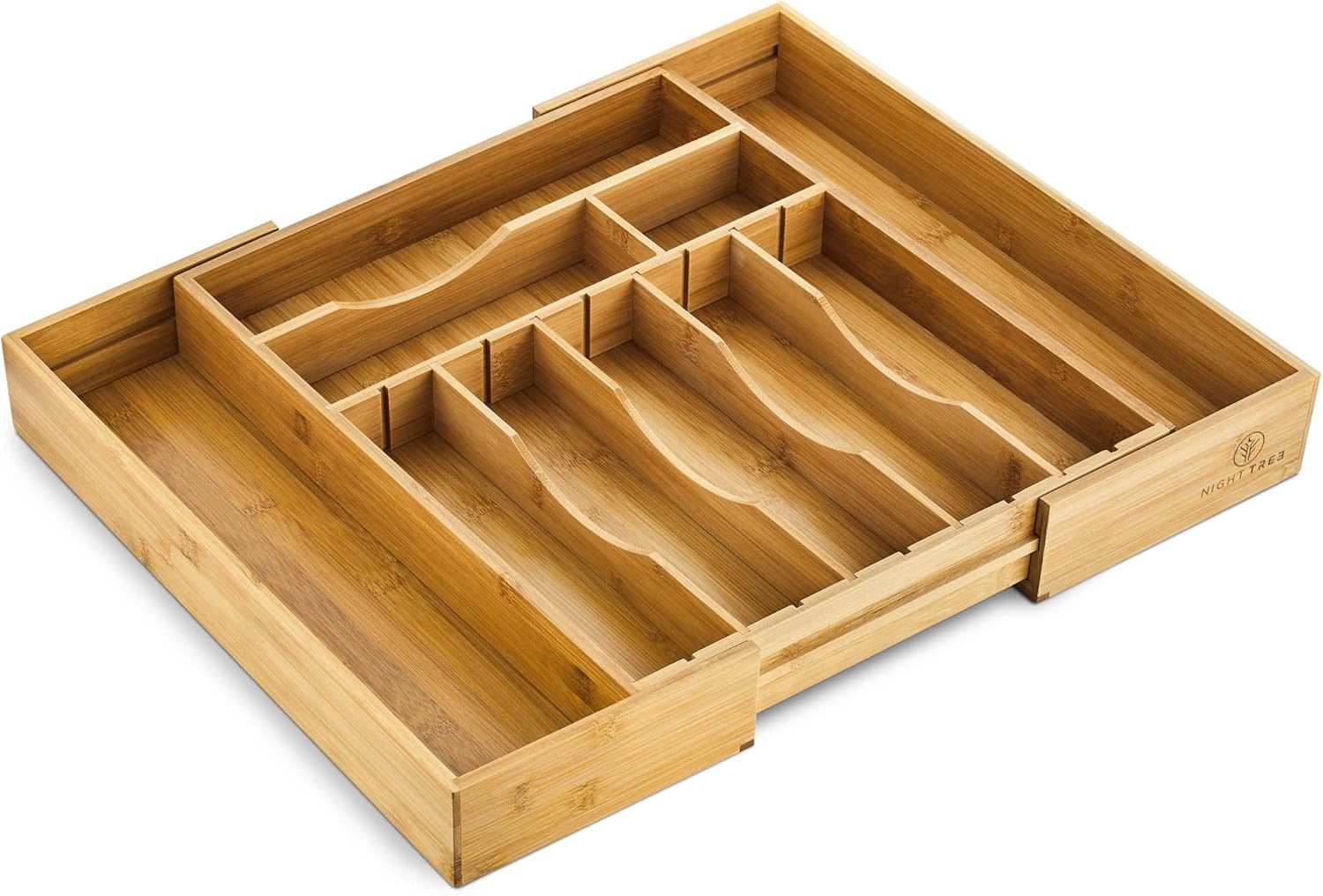
Most standard kitchen drawers run 12–24 inches wide and 18–21 inches deep — but 'standard' is misleading because IKEA, KraftMaid, and custom cabinetry all differ by up to 2 inches in each direction. Measure your drawer's interior width, depth, and height (clearance matters if your drawer slides under a lip). The Night Tree Bamboo Expandable Drawer Organizer stretches from roughly 13 to 21 inches wide, covering the majority of residential drawers without shimming or cutting. For unusually narrow galley-kitchen drawers under 12 inches, look at individual divider panels rather than full trays. Write down three numbers — width, depth, height clearance — before you shop, and you'll avoid the single biggest return reason for drawer organizers.
The 4-Zone System: How to Actually Lay Out Your Drawer
Zone 1 (front, widest): everyday hand towels you grab without looking — limit to 4–6 so the stack never topples. Zone 2 (middle-left): dish cloths folded in tight rectangles and stood on edge like files, which triples visible capacity versus flat-stacking. Zone 3 (middle-right): specialty linens — holiday prints, guest towels, cloth napkins — kept separated so they don't migrate into the daily rotation. Zone 4 (back strip, 2–3 inches deep): the catch-all for spare pot holders or a spare set of silicone oven mitts. Bamboo dividers make this layout rigid and permanent; without them, Zone 1 always colonizes everything else within a week.
The Right Folding Method Changes Everything
Flat-stacking towels is the enemy of drawer organization: you pull one, three come with it, and within a day the drawer looks ransacked. The file-fold method — fold a towel in half lengthwise, then thirds, then stand it vertically with the folded edge up — lets you see every towel's pattern or color at a glance and creates a self-supporting row that stays put. In a standard 21-inch deep drawer divided into two columns, you can comfortably file-fold 8–10 full-size kitchen towels and still have a front zone for immediate-grab items. Test run: fold five towels flat versus five file-folded and measure the difference in space — you'll reclaim roughly 40% of vertical drawer real estate with the file method alone.
Honest Comparison: Night Tree Bamboo Dividers vs. Generic Plastic Organizers
Generic plastic drawer organizers from big-box stores typically run $8–$14 and look fine on day one — but they slide around because they're lightweight, crack at the stress points within 18 months, and come in fixed sizes that rarely match your actual drawer. The Night Tree Bamboo Drawer Dividers (Set of 4) retail around $34–$39 and use spring-tension mounting so they grip the drawer walls without screws or adhesive, meaning zero drawer damage if you rent. The bamboo construction adds enough mass that the dividers don't migrate when you yank a towel quickly — a small thing that matters 4–6 times a day. The honest trade-off: bamboo costs 2–3x more upfront, but a set that lasts 10+ years versus replacing plastic twice costs less over time and produces zero plastic waste.
Common Mistakes That Undo Good Organization Within a Week
Mistake #1: too many zones for too small a drawer — three zones in a 12-inch drawer creates divisions so narrow that folded towels can't stand upright. Stick to two zones if your drawer is under 15 inches wide. Mistake #2: mixing dish cloths and hand towels — they're different thicknesses and rotation rates, so they inevitably jumble. Keep them in separate zones or separate drawers entirely. Mistake #3: buying dividers before measuring drawer height clearance — a divider that's 3 inches tall in a 2.5-inch clearance drawer simply won't let the drawer close. Mistake #4: overstuffing — a fully organized drawer should have 20–25% free space so towels can be replaced without force, which is the single biggest behavioral reason people abandon organized drawers.
Frequently Asked Questions
What size bamboo dividers fit most kitchen towel drawers?
Most residential kitchen drawers measure 12–24 inches wide and 18–21 inches deep. An expandable bamboo divider that adjusts from 13 to 21 inches wide covers the vast majority of standard drawer sizes. Always measure your drawer's interior width, depth, and height clearance before purchasing — height clearance is the most commonly overlooked dimension.
How many kitchen towels should I keep in one organized drawer?
For a standard 21-inch deep kitchen drawer organized into two or three zones, 6–10 full-size kitchen towels file-folded vertically is the practical sweet spot. Keeping 20–25% of the drawer free prevents the friction that causes people to abandon organization systems within weeks. Rotate extras to a linen closet rather than cramming them in.
Will bamboo dividers damage my kitchen drawer finish?
Quality bamboo dividers that use spring-tension mounting — pressing outward against the drawer walls rather than using screws or adhesive — leave zero marks on wood, laminate, or painted drawer interiors. They're fully removable and renter-safe. Avoid any divider that requires drilling or permanent adhesive strips if you want damage-free installation.
Ready to upgrade?
Ready to stop wrestling with the towel drawer every morning? Grab the Night Tree Bamboo Drawer Dividers (Set of 4) — spring-tension mounted, renter-safe, and sized to fit the drawers you actually have.