The average household owns 17 reusable bags and uses fewer than 4 of them regularly — the rest get wadded into a cabinet corner and forgotten, which means people reach for a disposable plastic bag anyway. A five-minute reorganization system fixes this completely, and it starts with making your reusables impossible to ignore.
To organize reusable bags and food wraps and actually cut waste, store everything upright and visible in one dedicated spot — a countertop bamboo organizer or a single drawer section works best. Group by type: zip bags, silicone bags, beeswax wraps, and reusable sandwich bags. Visibility is the whole game: if you can't see it, you won't use it.
Why Most Reusable Bag Systems Fail (And What Actually Works)
The core problem isn't motivation — it's friction. When reusable bags are stuffed into a grocery tote hanging on a door hook or crammed into a junk drawer, retrieving them takes more mental energy than just grabbing a Ziploc. Research from behavioral economics consistently shows that sustainable habits stick when the eco-friendly option is the path of least resistance. The fix is ruthlessly simple: designate one visible, accessible home for every reusable storage item you own, and make it easier to grab the reusable than to reach for a disposable. That single structural change — not a resolution, not a reminder app — is what actually moves the needle on kitchen waste.
The Four Categories Worth Organizing (Sort These First)
Before you buy a single organizer, do a five-minute audit. Pull everything out and sort into four piles: (1) zip-style reusable bags (silicone or PEVA), (2) beeswax or plant-based food wraps, (3) reusable sandwich and snack bags, and (4) the disposable zip bags you still keep for genuine edge cases. Most households discover they have duplicates, half-empty boxes of wax wraps they forgot about, and at least three bags with broken seals worth tossing. Purging the dead weight first means your final system only holds things you'll actually reach for — a leaner collection is a used collection. Keep your disposable Ziplocs, but relegate them to one small box tucked behind your primary reusable station so they're not the default grab.
The Upright Organizer Method: Best Setup for a Kitchen Drawer
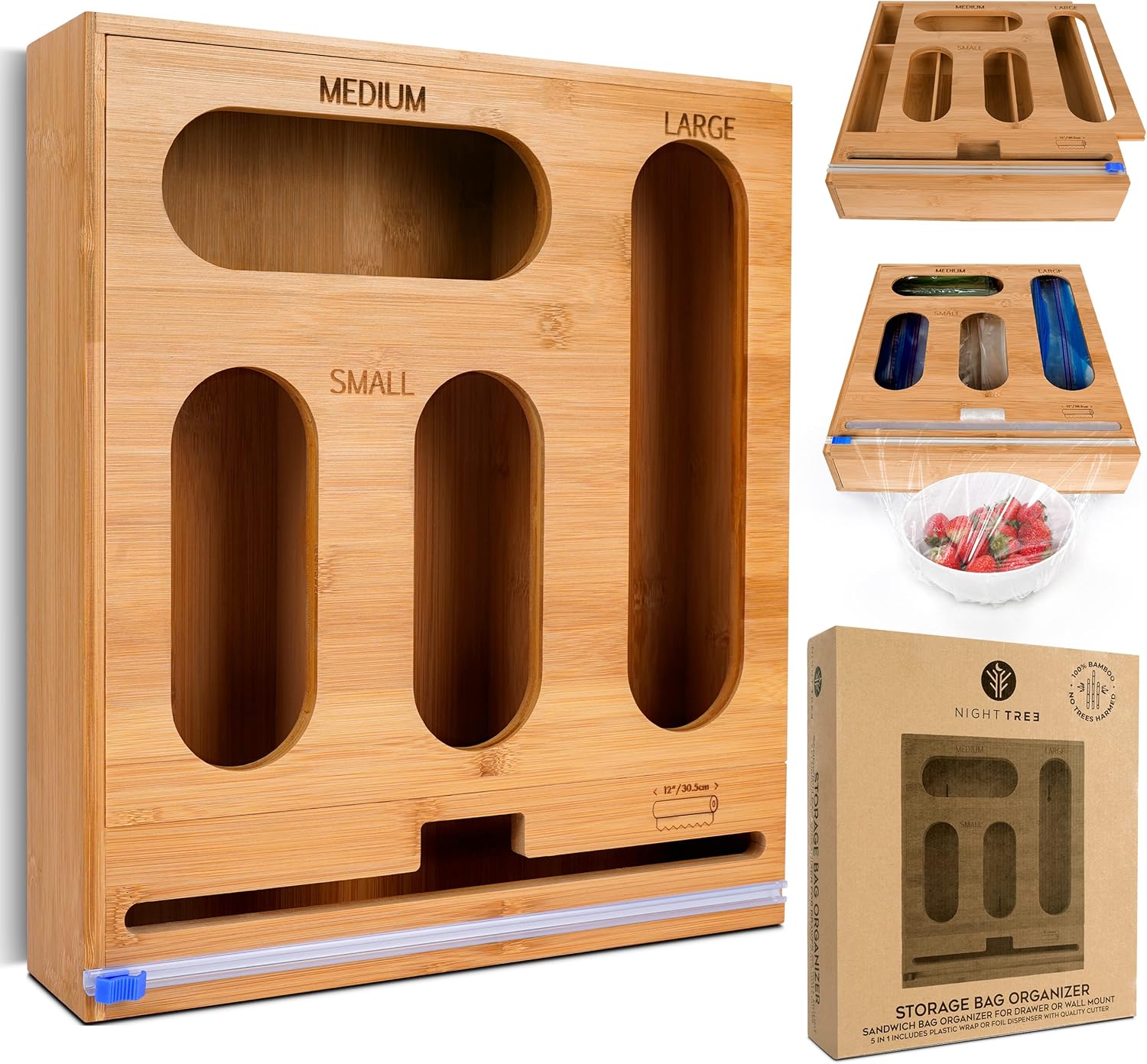
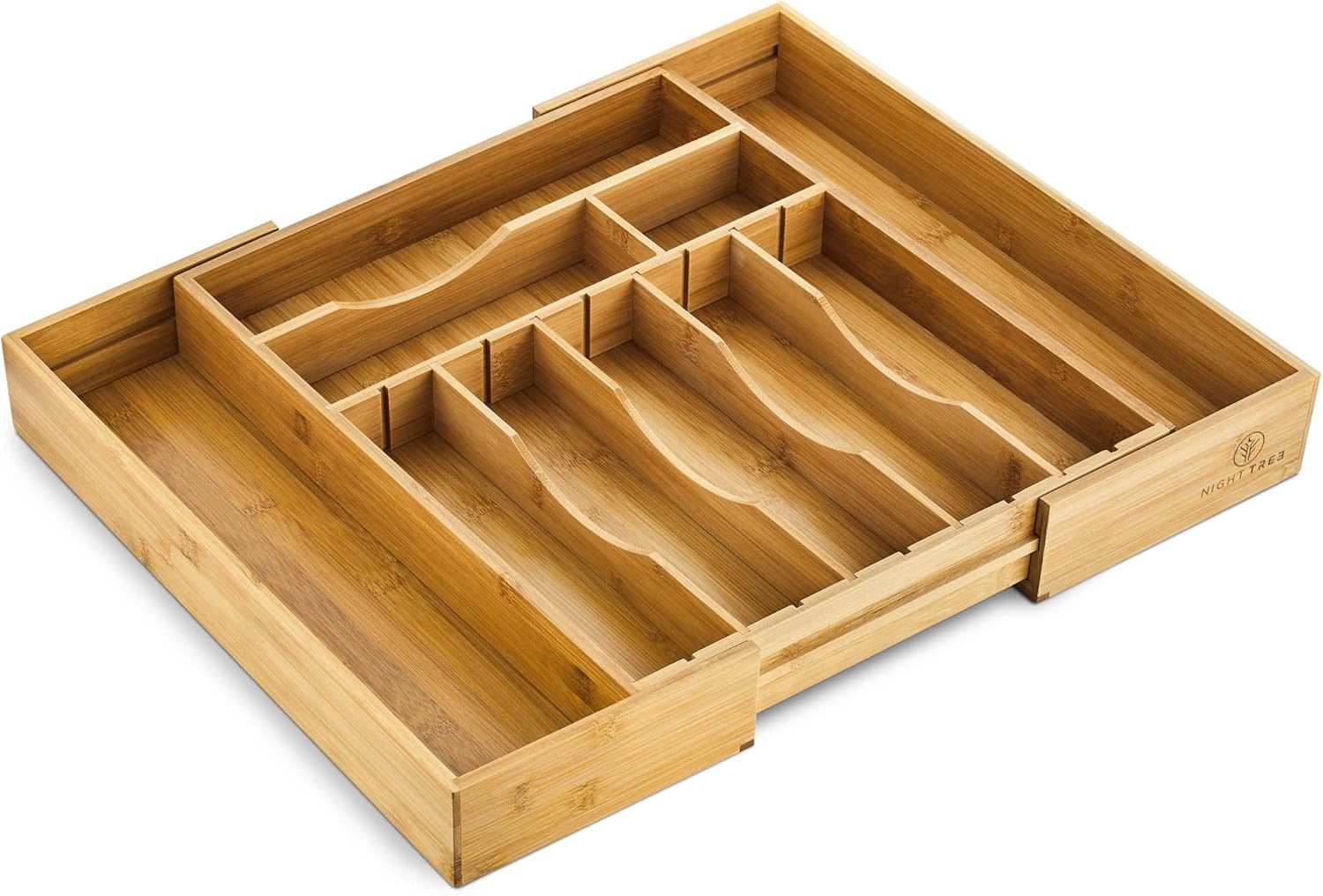
Standing bags upright — the same way a filing system works for paper — is the single biggest upgrade most kitchens can make. When bags lie flat in a stack, you only ever use the top one. The Night Tree Bamboo Ziplock Bag Storage Organizer is built around this principle: slotted bamboo dividers hold gallon, quart, and sandwich-size bags upright and separated so you can fan through them in under two seconds. It measures approximately 9.5 inches wide and fits standard 12- to 15-inch drawers without a fight, and the natural bamboo surface won't absorb odors or harbor bacteria the way plastic organizers do. Pair it with the Night Tree Bamboo Expandable Drawer Organizer in the same drawer to carve out a dedicated zone for beeswax wraps and silicone bags — the expandable design stretches from 13 to 21 inches to fit nearly any drawer width, so you're not committing to a permanent size before you know what fits.
Honest Comparison: Bamboo Organizer vs. Generic Plastic Drawer Insert
A $6 plastic drawer insert from a big-box store will technically hold your bags upright, but it flexes under weight, can leach odor after repeated contact with silicone and beeswax products, and typically cracks within 18 months of daily use. Bamboo is roughly 3× harder than most softwood alternatives and naturally antimicrobial, which matters in a kitchen environment where wraps touch food directly. The price gap is real — a quality bamboo organizer runs $20–$35 versus $6–$10 for plastic — but the math flips when you're replacing a plastic insert every year or two. More importantly, buying one more piece of plastic to organize your plastic-free kitchen accessories is a small but genuine contradiction that bamboo sidesteps entirely.
Where to Store Wraps, Bags, and Organizers in a Small Kitchen
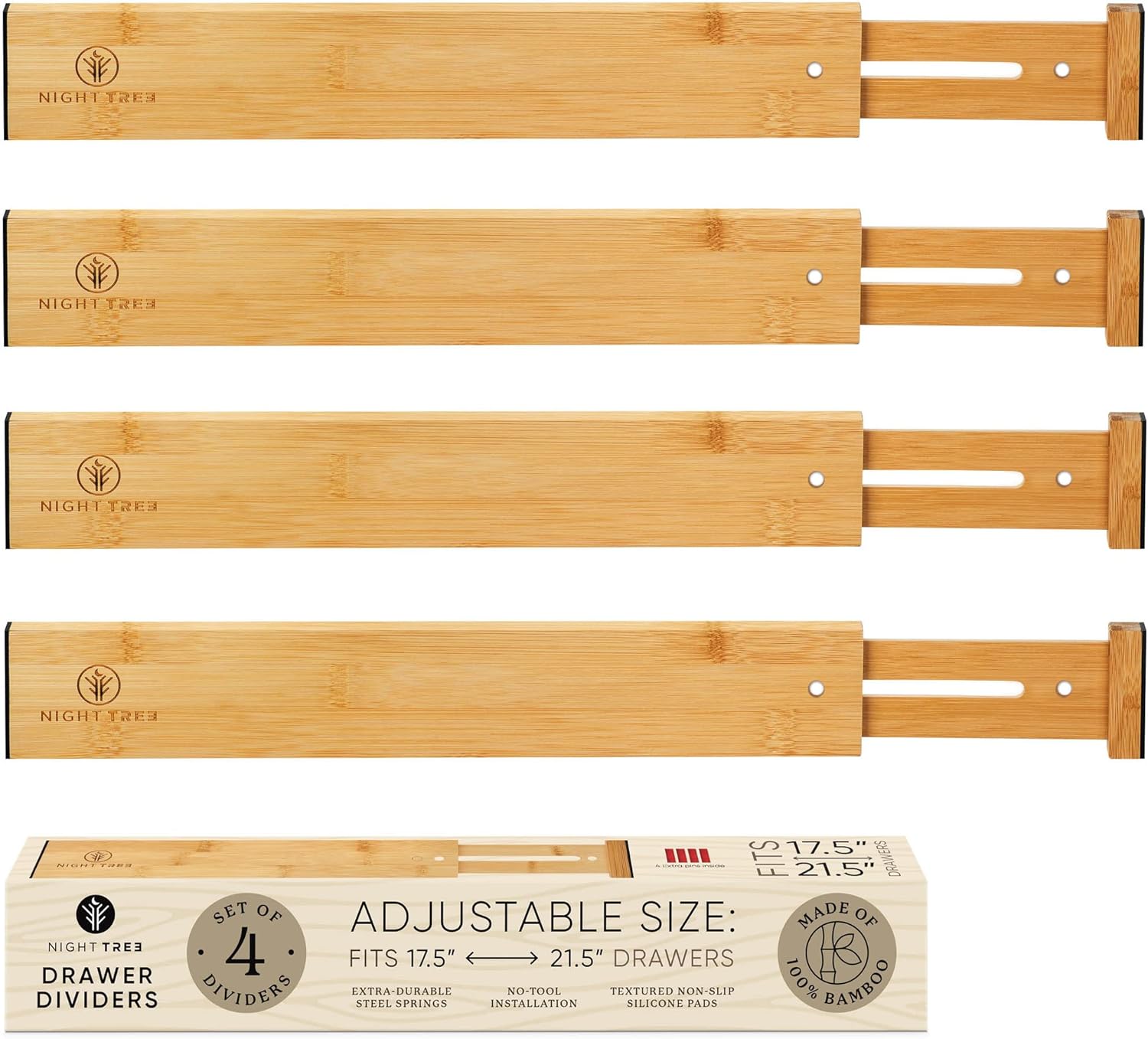
Counter space is the premium currency of a small kitchen, so the decision of drawer versus countertop matters. If you have a junk-magnet drawer near the prep area, converting it entirely into a reusable-wrap station using the Night Tree Bamboo Drawer Dividers (Set of 4) is the cleanest solution — the dividers are adjustable and lock into place without tools, letting you create slots sized exactly to your wrap boxes, silicone bag stacks, and folded beeswax squares. If you're drawer-poor, the Night Tree Bamboo Ziplock Bag Storage Organizer is compact enough to sit on a 10-inch countertop shelf or inside a pantry cabinet door shelf without feeling intrusive. One rule regardless of location: the reusable station should be within arm's reach of wherever you pack lunches or prep food — proximity to the action is what turns a system into a habit.
Maintaining the System: How to Keep It Working in 2026 and Beyond
The best organization system is the one that's easy to reset. After washing a silicone bag or beeswax wrap, it should have one obvious home to return to — if it takes more than 10 seconds to figure out where it goes, it'll end up on the counter permanently. Build a 60-second 'reset' into your dishwashing routine: as clean items come out, they go directly back into their labeled slot or section before you do anything else. Bamboo organizers earn their keep here because they're easy to wipe clean and don't require special care — a damp cloth is enough. Every three months, do a quick audit: pull everything out, discard any wraps that have cracked or lost their seal, and note what you're running low on so you replenish before resorting to disposables out of necessity.
Frequently Asked Questions
What is the best way to store reusable Ziploc-style bags in a kitchen drawer?
Store them upright and sorted by size in a slotted bamboo organizer — the Night Tree Bamboo Ziplock Bag Storage Organizer holds gallon, quart, and sandwich sizes in separate slots so you can see and grab each size instantly without digging.
Can you store beeswax wraps and silicone bags together in the same drawer organizer?
Yes, and it's actually ideal. Use adjustable drawer dividers — like the Night Tree Bamboo Drawer Dividers (Set of 4) — to create distinct sections within one drawer: one slot for flat beeswax wraps stored like folded paper, a wider slot for silicone bags stored upright, and a small bin for reusable sandwich bags.
How many reusable bags does the average household actually need to go mostly plastic-free?
For a household of two to four people, 6–8 silicone or PEVA reusable bags in mixed sizes (two gallon, four quart, two snack) plus 4–6 beeswax wraps in small, medium, and large covers nearly every food-storage need — the key is having enough that you're never waiting on a clean one while one is still in the dishwasher.
Ready to upgrade?
Ready to make your reusables impossible to ignore? The Night Tree Bamboo Ziplock Bag Storage Organizer gives every bag a visible, upright home — grab yours at nightree.com and turn a 30-second habit into real kitchen waste reduction.