Most wooden salad bowls crack within a year — not because wood is fragile, but because buyers don't know what separates food-safe, properly oiled acacia from a decorative prop dressed up as kitchenware. There's a real difference, and it shows up fast.
An acacia wood salad bowl set is a sustainable, naturally antibacterial serving option made from one of the world's hardest, fastest-growing hardwoods. A quality set includes a large serving bowl (12–15 inches) plus matching servers, is finished with food-safe oil, and lasts 10+ years with minimal care.
Why Acacia Wood Beats Bamboo and Plastic for Salad Bowls
Acacia ranks around 1,700 on the Janka hardness scale — harder than teak, harder than walnut, and dramatically more durable than the soft pine bowls that dent and stain after one season. Its tight, interlocked grain resists moisture absorption better than most hardwoods, which means less warping and less bacterial penetration at the surface level. Acacia is also one of the few hardwoods that regrows to harvestable size in 5–7 years, compared to 25–80 years for oak or maple — so you're not trading sustainability for durability. The warm caramel tones with dark streaking also photograph beautifully, which matters if your Sunday dinner table ends up on Instagram, but more importantly, it means the grain is dense and naturally rich in oils that protect the wood from the inside out.
What a Good Acacia Salad Bowl Set Actually Includes
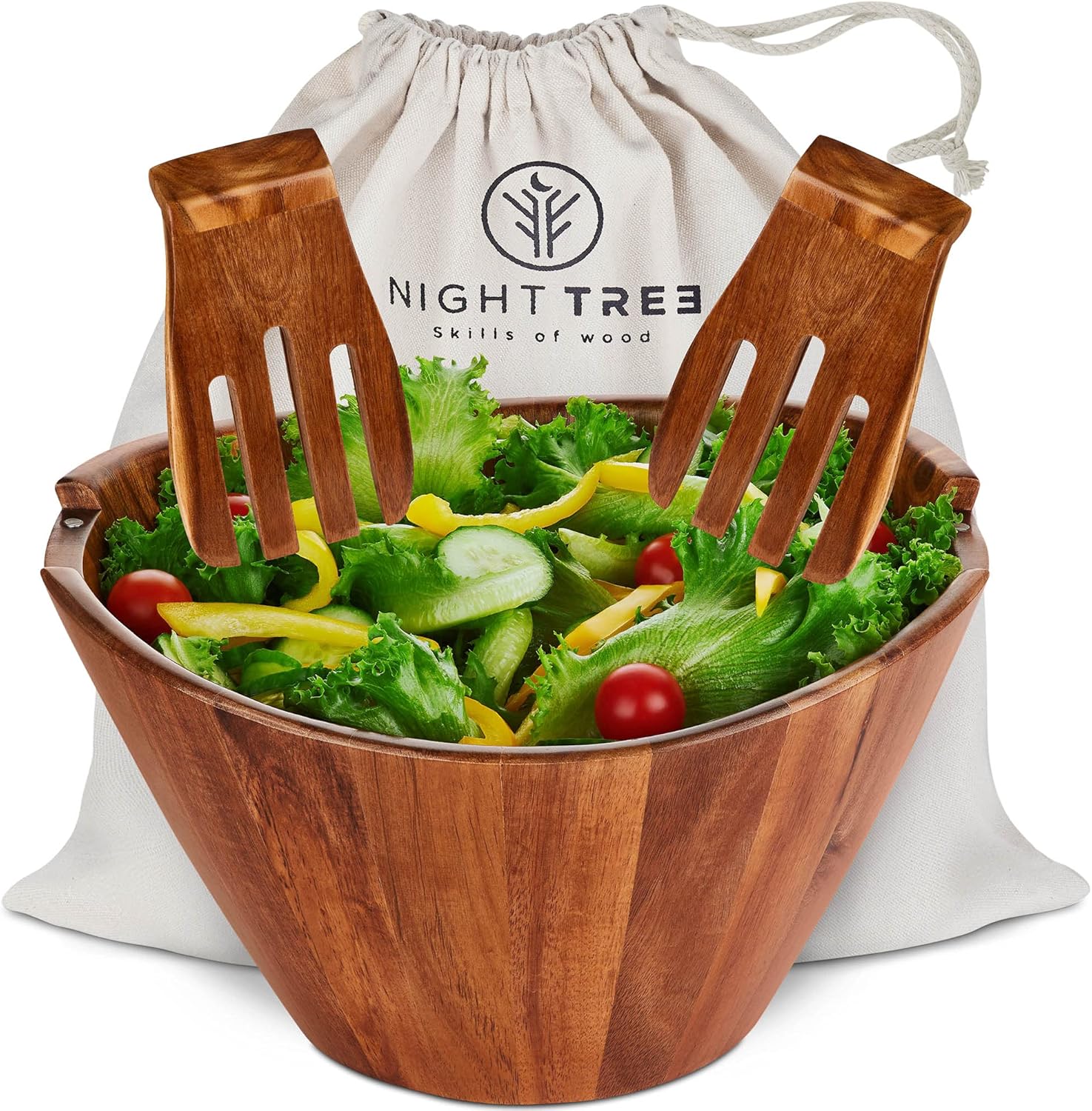
A proper set has three things: a large serving bowl in the 12–15 inch range (big enough for a full Caesar for six), a matching pair of salad servers (spoon and fork), and a food-safe finish — typically mineral oil, beeswax, or a blend, never varnish or lacquer that cracks and chips into your greens. The Night Tree Acacia Wood Salad Bowl Set hits all three: the bowl is sized for real family meals, the servers are integrated into the design rather than afterthoughts, and the finish is food-safe from the first use. Weight matters too — a bowl that's too light flexes under a heavy toss; look for something substantial in the hand, which dense acacia naturally provides at the right wall thickness (roughly 0.4–0.5 inches is the sweet spot between heft and practicality).
Honest Comparison: Night Tree vs. Generic Acacia Bowls
The market is flooded with acacia bowls that look identical in product photos but diverge sharply in real kitchens. Generic import sets often use thinner walls (under 0.3 inches), skip food-safe finishing, and pair low-grade servers that don't match the bowl's grain treatment — meaning the servers dry out and crack first. The Night Tree Acacia Wood Salad Bowl Set uses consistently sourced acacia with matched finishing across bowl and servers, so everything ages together rather than one piece failing early. Price-wise, quality acacia sets run $35–$75; anything under $25 is almost certainly thin-walled or finished with a non-food-safe coating — a corner you don't want cut when the product sits in direct contact with your food.
How to Care for an Acacia Wood Salad Bowl (So It Lasts a Decade)
Never put acacia in the dishwasher — the high heat and detergent strip the natural oils in a single cycle, and what looked gorgeous on day one will crack by month three. Hand-wash with warm (not hot) water and mild soap, then dry immediately with a towel rather than air-drying, which lets moisture sit unevenly in the grain. Re-oil with food-grade mineral oil or a beeswax blend every 2–3 months, or whenever the wood starts to look pale and matte — that's the wood telling you it's thirsty. A well-maintained acacia bowl actually improves with age: the oils deepen the color, the grain becomes more pronounced, and the surface develops a patina that no factory finish can replicate. This is the rare kitchen item that looks better at year five than year one.
The Organized Kitchen Play: Pairing Your Bowl Set with Smart Storage
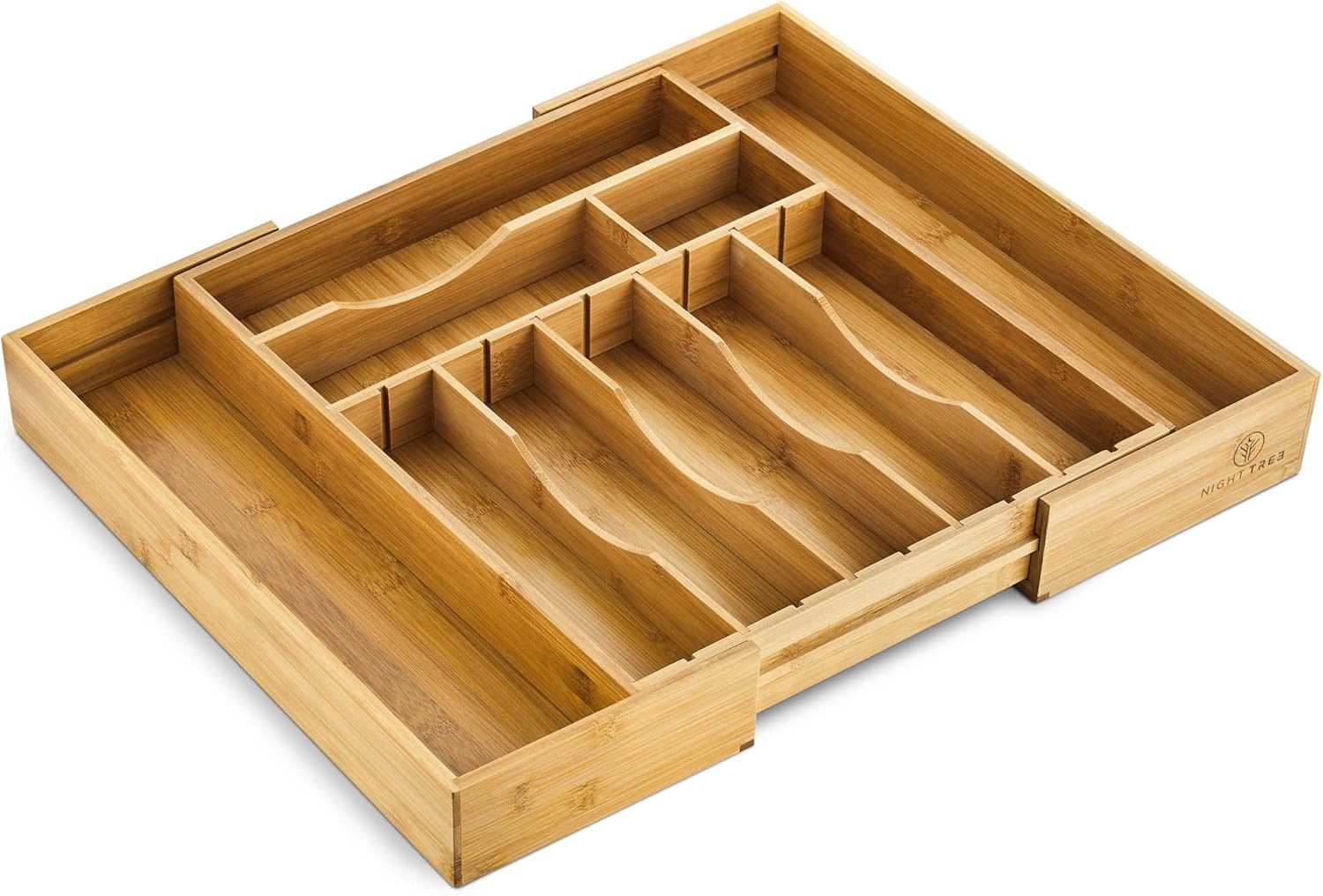
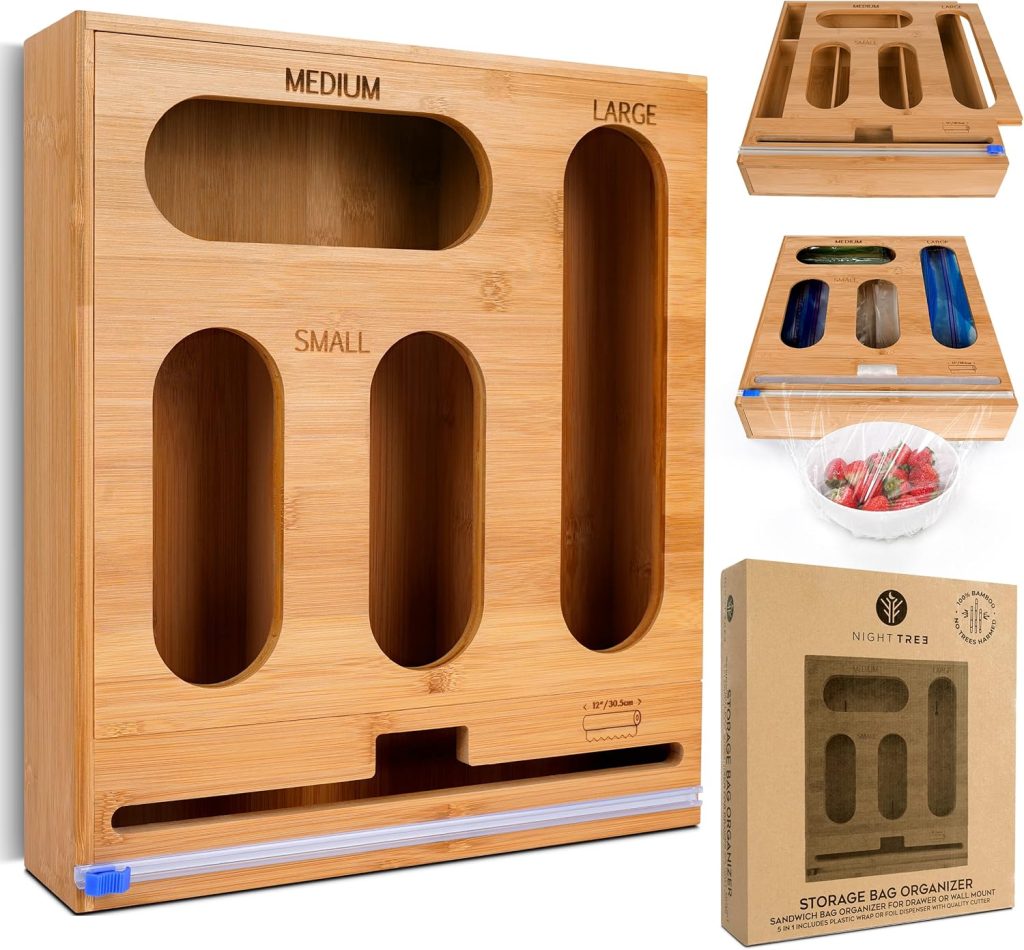
A beautiful salad bowl deserves a kitchen that matches it — and the fastest way to ruin a well-designed table setting is to spend four minutes hunting through a chaotic drawer for the serving spoons. If you're rethinking your kitchen as a whole (and buying a proper bowl set is often the moment people do), it's worth pairing it with drawer organization that actually holds its shape. The Night Tree Bamboo Expandable Drawer Organizer adjusts to fit nearly any drawer width and keeps utensils, servers, and tools separated so everything is exactly where you expect it. Bamboo and acacia are natural material companions — both sustainable hardwoods, both warm-toned, both built to last longer than anything plastic — so the aesthetic consistency is a genuine bonus, not just a sales pitch.
Frequently Asked Questions
Is acacia wood safe for food contact in a salad bowl?
Yes — acacia is naturally dense with tight grain that resists bacterial penetration, and when finished with food-safe mineral oil or beeswax (not varnish or lacquer), it is completely safe for direct food contact. Always confirm the finish type before buying; a quality set like the Night Tree Acacia Wood Salad Bowl Set will specify food-safe finishing explicitly.
How big should an acacia salad bowl be for a family of four to six?
For a family of 4–6, a 12–14 inch diameter bowl with 4–5 inch depth is the practical sweet spot — large enough to toss a full salad without flinging greens onto the counter, but not so oversized it dominates your table or storage shelf. Anything under 10 inches is a personal or side-salad bowl, not a true serving bowl.
Can you put an acacia wood salad bowl in the dishwasher?
No. Dishwasher heat and detergent strip acacia's natural oils in a single cycle, leading to cracking, warping, and surface damage. Hand-wash with warm water and mild soap, dry immediately, and re-oil with food-grade mineral oil every 2–3 months to keep an acacia bowl in peak condition for 10 or more years.
Ready to upgrade?
Ready to upgrade your table with a bowl that only gets better with age? The Night Tree Acacia Wood Salad Bowl Set is sized for real meals, finished food-safe, and built to last a decade — grab yours at nightree.com.