Olive wood salad bowls can cost three times more than acacia — yet most home cooks can't tell the difference after two months of weekly use. Before you spend $80 on a bowl that needs babying, here's what the wood actually delivers.
Acacia wood wins for most home cooks: it's denser (Janka hardness ~1700 lbf vs olive's ~1320 lbf), more moisture-resistant, sustainably fast-growing, and costs 40–60% less. Olive wood offers stunning swirled grain and a prestige feel, but requires more careful maintenance and isn't suited for large-format bowls. Acacia is the smarter everyday pick.
Hardness and Durability: Acacia Has a Clear Edge
Acacia rates around 1,700 lbf on the Janka hardness scale; olive wood sits closer to 1,320 lbf. That gap matters in a salad bowl — you're dragging metal tongs, acidic dressings, and rough wooden spoons across the surface every week. Acacia's tighter, denser grain resists those micro-scratches and repels moisture more aggressively, which means fewer cracks over the years. Olive wood is genuinely hard by most standards, but acacia simply takes more punishment without complaint.
Grain, Aesthetics, and 'The Look': Olive Wood Wins on Drama
If you want a bowl that stops dinner guests mid-conversation, olive wood has an almost unfair advantage: its tight, swirling dark-and-cream grain looks like a slow-motion marble pour. Every piece is unique, which is why artisan bowls from Tuscany or Morocco command $70–$150 for a single medium bowl. Acacia isn't plain — its warm amber tones and subtle streaking are genuinely attractive — but it's more uniform, which means large matched sets look cohesive rather than chaotic. For everyday table styling in 2026's 'warm minimalist' aesthetic, acacia's consistency actually photographs better in a flat lay.
Sustainability: Acacia Is the Clear Eco Winner
Acacia trees reach harvestable maturity in as few as 5–7 years; olive trees take 25–80 years to fully mature and are a protected agricultural crop in many Mediterranean countries. That means commercially available olive wood is almost entirely a byproduct of orchard pruning — gorgeous, but limited in supply and impossible to scale sustainably for large bowl sets. Acacia is widely certified by the FSC and Rainforest Alliance, grows on degraded land across Southeast Asia and Africa, and actively improves soil nitrogen. If your reason for buying wooden bowls is partly environmental, acacia's footprint is substantially lower.
Maintenance and Care: Olive Wood Demands More Attention
Both woods need oiling — skip it for either and you'll see cracking within a year of regular use. But olive wood is more sensitive to temperature swings and prolonged water exposure because its grain runs in tighter, more complex patterns that expand unevenly when wet. Acacia's straighter, denser grain handles the occasional lazy rinse-and-drain without panicking. Neither wood is dishwasher safe (ever), but acacia forgives the accidental overnight soak that olive wood punishes with warping. Monthly food-grade mineral oil treatments keep both in top shape, but acacia's maintenance window is wider.
Price and Value: Acacia Wins by a Wide Margin
A quality acacia salad bowl set — bowl, servers, and often two individual bowls — typically runs $35–$65 in 2026. A comparable olive wood set from a reputable maker starts at $90 and can easily reach $200 for anything larger than 12 inches. That price gap exists because olive wood supply is limited, artisan labor is intense, and each piece varies wildly (which increases waste). Unless you're buying a single heirloom-quality statement piece for a gift, the acacia set delivers 90% of the experience at half the cost — and you won't wince when a house guest chips it with a serving spoon.
The Honest Comparison: Night Tree Acacia Wood Salad Bowl Set vs Generic Olive Wood
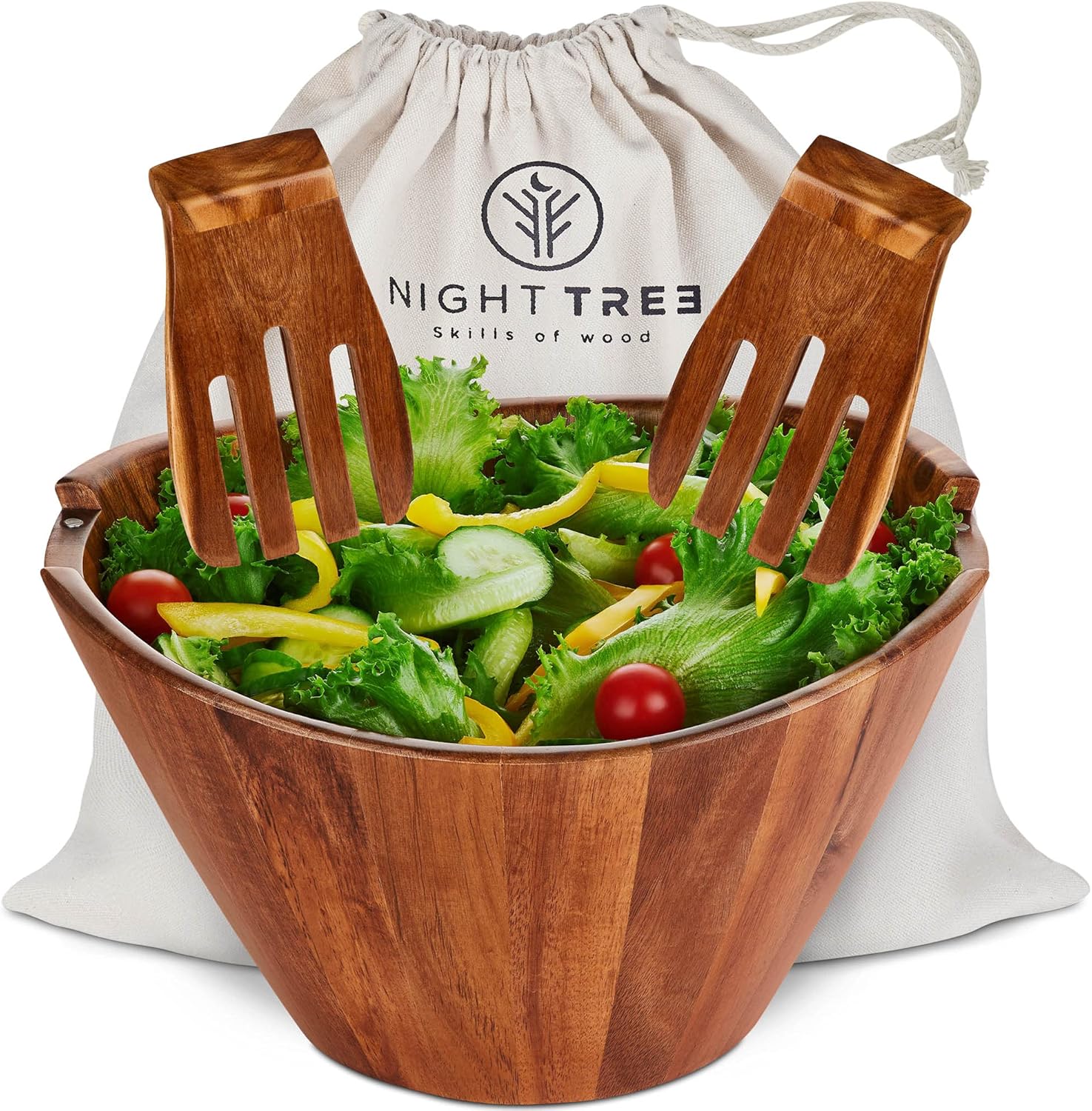
The Night Tree Acacia Wood Salad Bowl Set is built from FSC-certified acacia, pre-oiled, and designed as a complete serving system with matching servers — not a lone bowl that orphans your kitchen. It sits in the $45–$55 range, making it a genuinely competitive option against entry-level olive wood that offers none of the same sustainability credentials. The acacia's warm honey-and-amber tones work equally well on a rustic farmhouse table or a clean modern spread. If you're comparing it to a $120 hand-turned olive wood bowl, the olive wins on conversation-starting drama — but for daily use, weekly salads, and an eco-conscious kitchen, the acacia set wins on every practical metric.
Frequently Asked Questions
Can you use an acacia wood salad bowl for more than just salad?
Yes. Acacia's density and moisture resistance make it excellent for serving pasta, bread, fruit, and even charcuterie. Avoid holding hot liquids or acidic foods (like citrus juice) for extended periods, and always oil monthly to maintain the seal.
Is olive wood food-safe?
Yes, olive wood is naturally food-safe. It contains oleuropein, a compound with mild antimicrobial properties. However, it still requires regular food-grade mineral oil treatment to stay sealed and should never be submerged in water or placed in a dishwasher.
How often should you oil a wooden salad bowl?
Oil any wooden salad bowl — acacia or olive — once a month with food-grade mineral oil or a dedicated wood conditioner. If the bowl looks dry, ashy, or feels rough to the touch, that's a sign it needs conditioning immediately regardless of your schedule.
Ready to upgrade?
Ready to upgrade your table? The Night Tree Acacia Wood Salad Bowl Set gives you FSC-certified, pre-oiled, ready-to-serve acacia hardwood — durable enough for daily use, beautiful enough to leave on the table all weekend.