Bamboo grows up to 35 inches in a single day. Acacia trees take 20+ years. That one fact tells you almost everything about which wood ends up in your drawer organizer — and which deserves a spot on your dinner table.
Bamboo is better for kitchen organizers, drawer dividers, and high-moisture storage thanks to its hardness, fast renewability, and dimensional stability. Acacia wins for serving pieces — salad bowls, cutting boards, charcuterie — where its dense grain, natural oils, and rich color make food look (and feel) beautiful on the table.
The Short Answer: Use Both, But For Different Jobs
Bamboo is the workhorse; acacia is the showpiece. Bamboo regrows in 3-5 years versus 20+ for acacia, making it the smarter pick for utilitarian organizers you'll replace eventually. Acacia's tight grain (Janka hardness around 2,300 lbf vs bamboo's ~1,400) and natural oils make it the gold standard for salad bowls and serving boards. Buying one when you needed the other is the #1 mistake home cooks make.
Durability and Hardness: Acacia Hits Harder
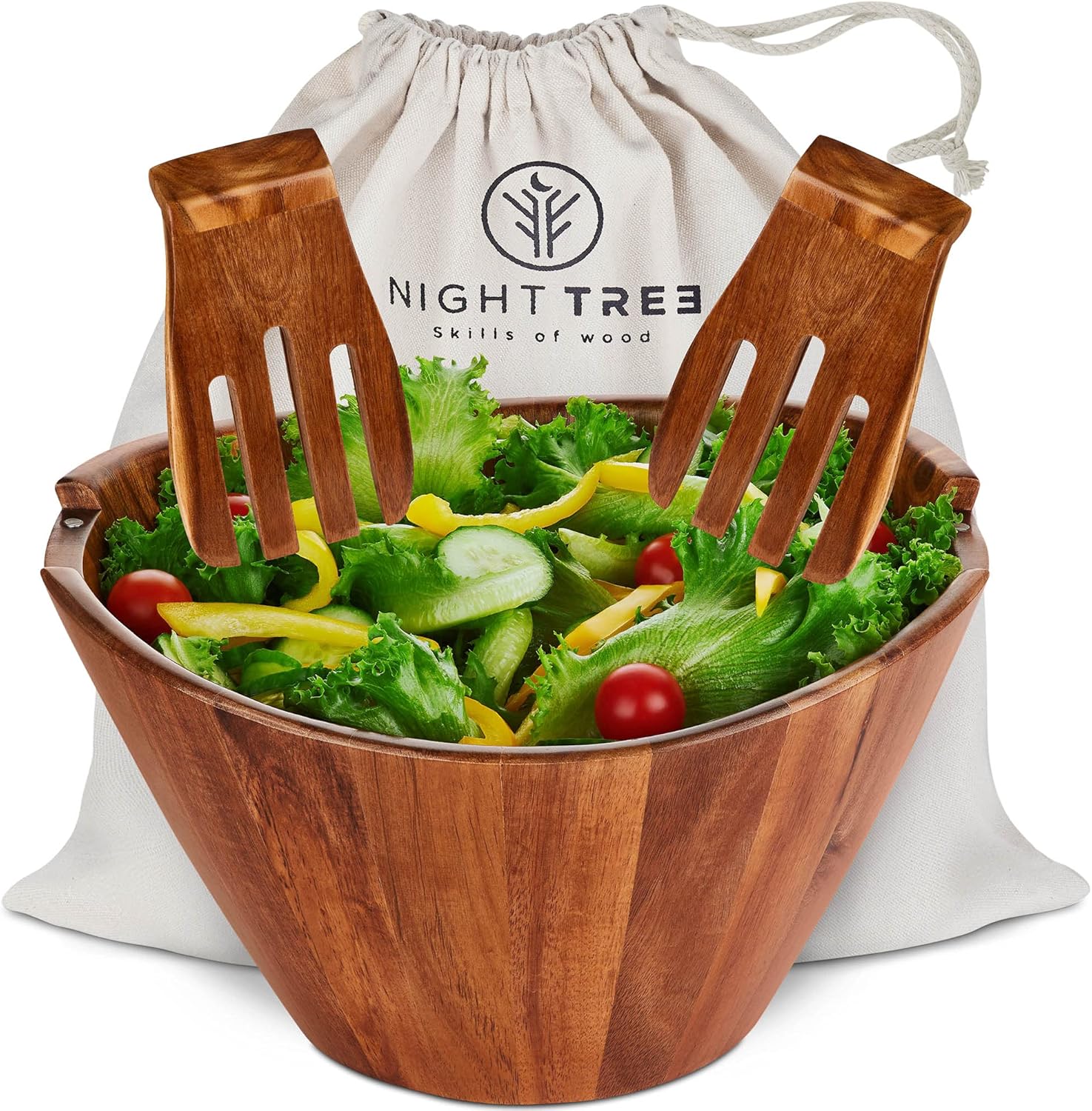
On the Janka hardness scale, acacia clocks in around 2,300 lbf — harder than hard maple. Strand-woven bamboo lands near 1,400-1,700 lbf, still tough but softer. Translation: acacia shrugs off knife marks on a cutting board; bamboo will show them faster. For a salad bowl tossed with metal tongs twice a week for a decade, acacia is the obvious pick. The Night Tree Acacia Wood Salad Bowl Set is built for exactly that kind of long-haul use.
Water Resistance and Kitchen Reality
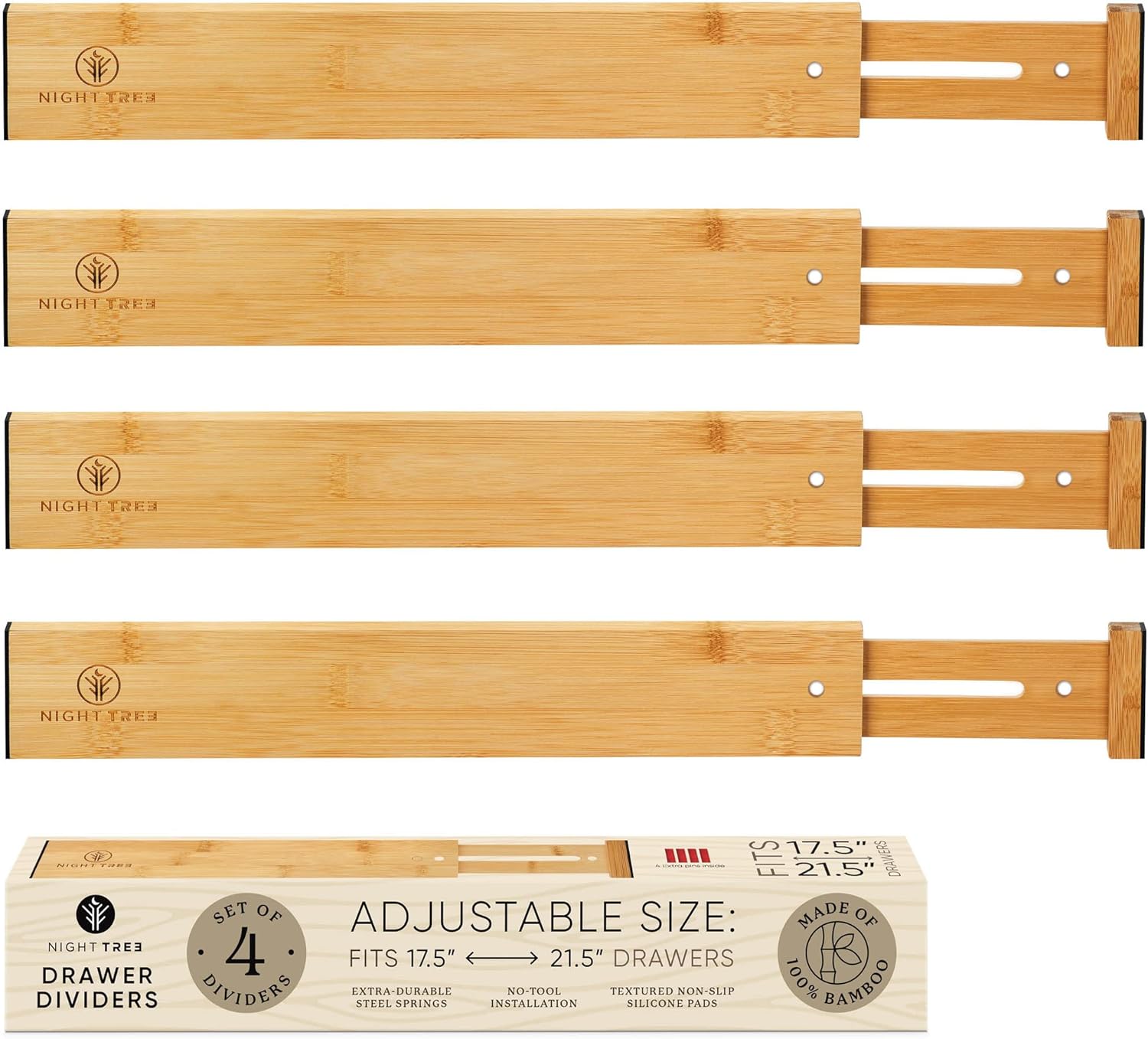
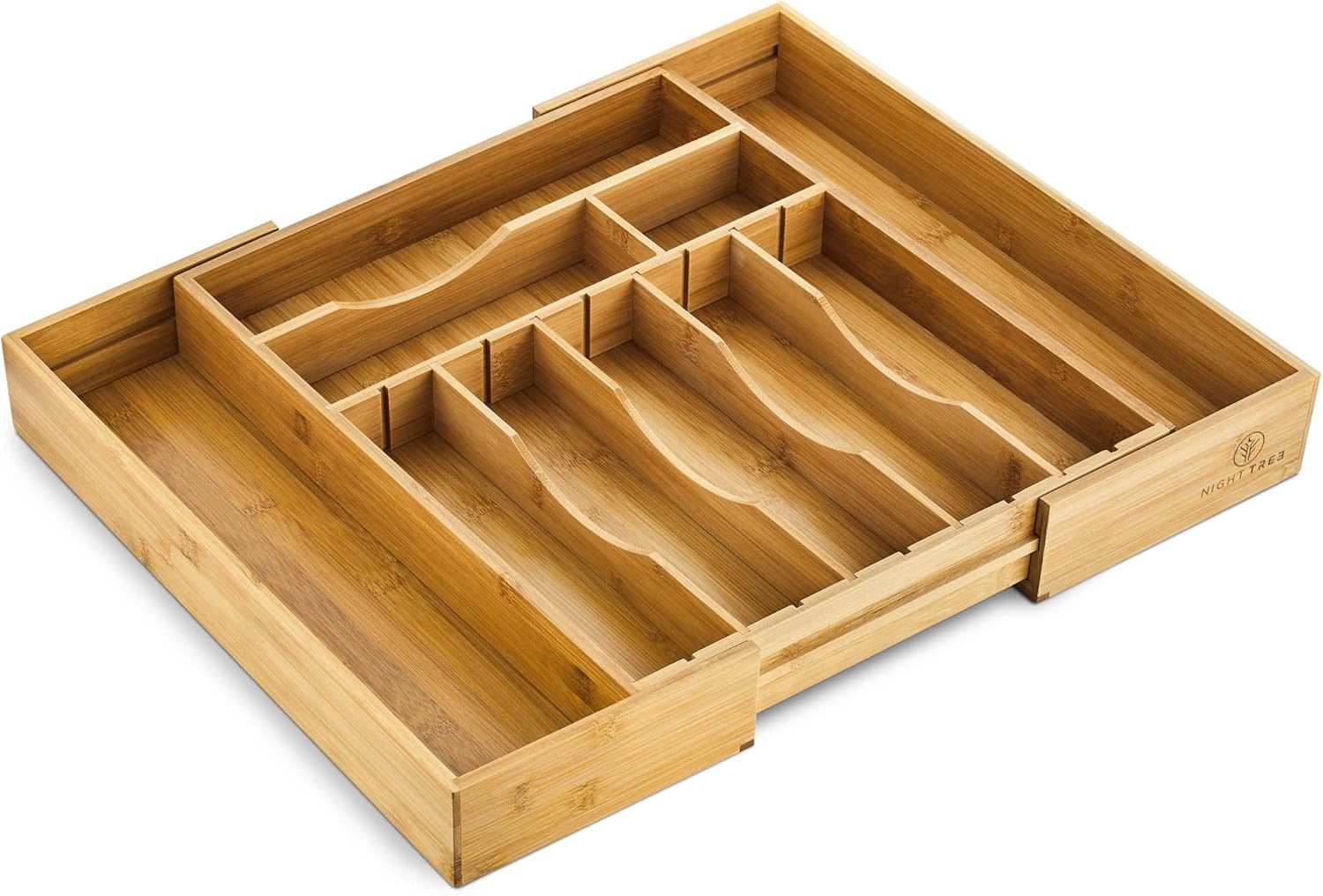
Both woods handle moisture well, but differently. Bamboo is a grass, so it expands and contracts less than most hardwoods — which is why it dominates drawer organizers that live near sinks and dishwashers. Acacia has natural oils that repel water on the surface but can crack if soaked. For anything that sits in a humid drawer 24/7, bamboo wins. That's why the Night Tree Bamboo Expandable Drawer Organizer and Night Tree Bamboo Drawer Dividers (Set of 4) are built from bamboo, not acacia.
Sustainability: Bamboo Laps the Field
Bamboo is technically a grass and regrows from its own root system in 3-5 years without replanting. Acacia, while fast-growing for a hardwood, still needs 20-25 years to mature and requires actual deforestation to harvest. In 2026, with FSC-certified acacia farms expanding in Vietnam and Indonesia, the gap has narrowed — but bamboo is still the lower-carbon choice. If sustainability is your #1 filter, lean bamboo for everything except heirloom serving pieces.
Looks and Feel: Acacia is the Dinner Party Material
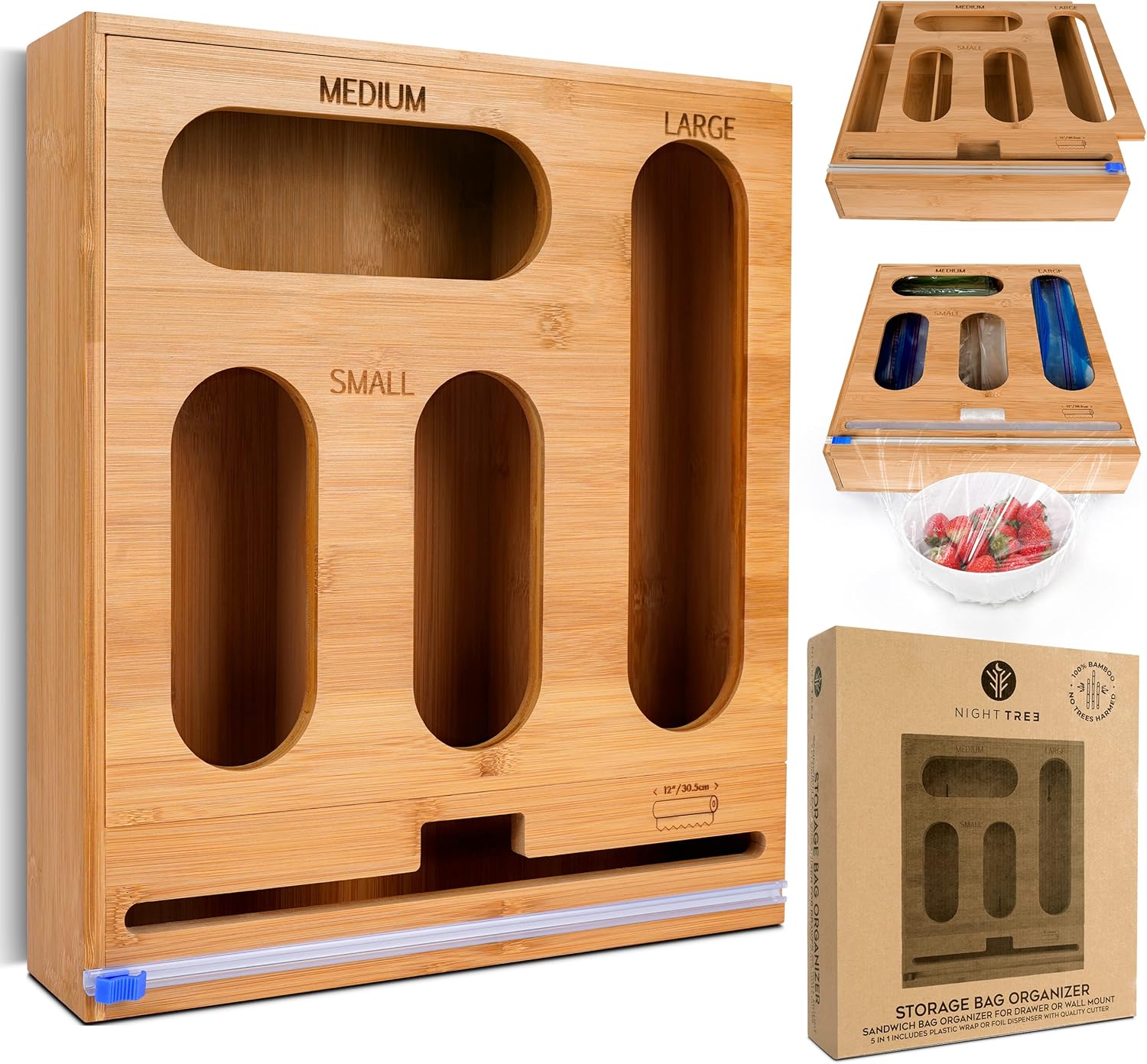
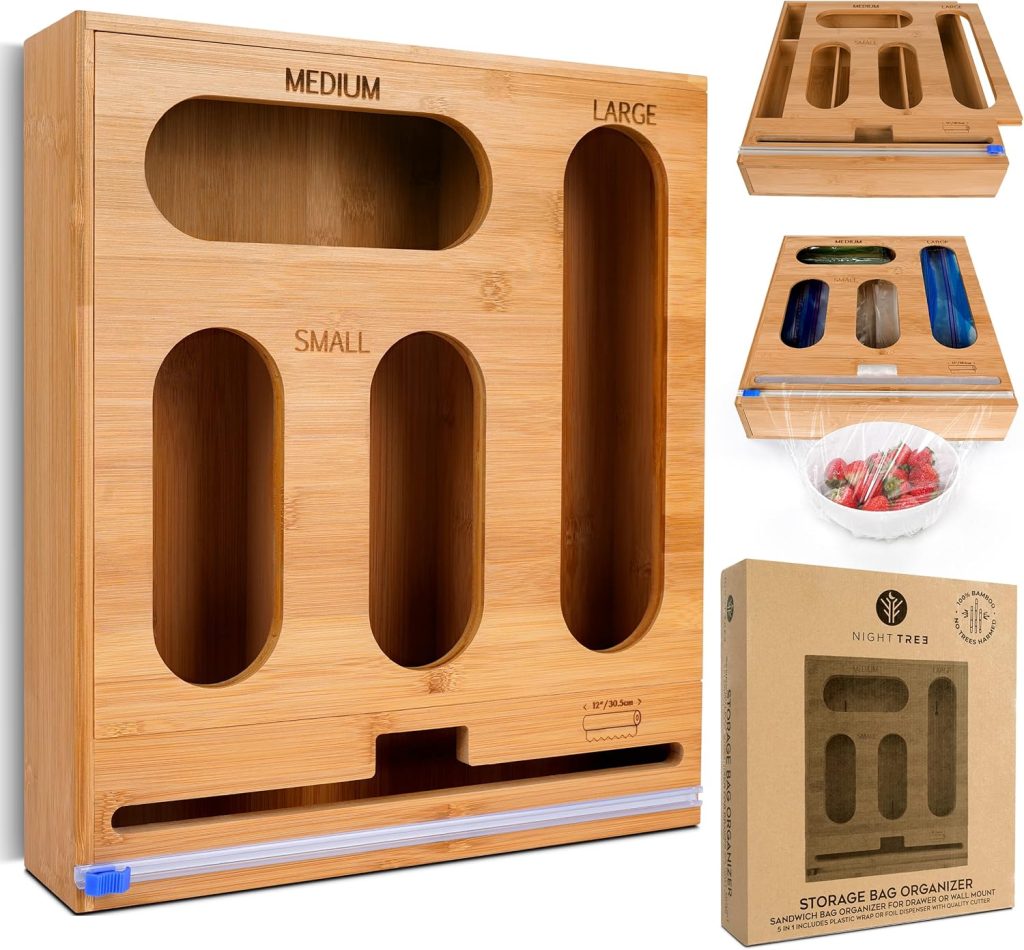
Acacia's swirling dark grain — caramel, chocolate, and gold streaks — looks like art on a table. Bamboo is uniform, pale, and clean: perfect inside a drawer, less dramatic on a buffet. If guests will see it, choose acacia. If it lives behind a cabinet door organizing ziplock bags (like the Night Tree Bamboo Ziplock Bag Storage Organizer does), bamboo is lighter, cheaper, and looks tidy where tidy matters.
Care: Both Hate the Dishwasher
Neither survives a dishwasher — hot water and detergent will warp, crack, or split both materials within months. Hand-wash with mild soap, dry immediately, and oil with food-safe mineral oil every 1-2 months. Acacia needs oiling more often because of its denser grain showing dryness faster. Bamboo organizers inside dry drawers can go years with just a wipe-down.
Price: Bamboo Costs Roughly 30-40% Less
Expect to pay $25-45 for a quality bamboo drawer organizer and $60-120 for an equivalent-quality acacia salad bowl set in 2026. The price gap reflects growth time, density, and finishing labor — acacia requires more sanding and oiling. The good news: you're rarely choosing between them for the same job, so the price comparison is mostly academic.
Frequently Asked Questions
Is acacia or bamboo safer for food contact?
Both are food-safe when finished with food-grade oils and free of toxic glues. Look for FSC-certified bamboo or acacia and avoid pieces with visible lacquer or unknown finishes. Night Tree products use food-safe finishes on both materials.
Can I put bamboo or acacia kitchenware in the dishwasher?
No. Both warp, crack, and dry out in a dishwasher. Hand-wash with warm soapy water, towel dry immediately, and re-oil acacia every 4-8 weeks with food-grade mineral oil to keep it from cracking.
Which lasts longer in a humid kitchen?
Bamboo. Because it's a grass with a tight linear fiber structure, it expands and contracts less than acacia in humid environments — making it the better choice for drawer organizers, utensil trays, and anything that lives near sinks or dishwashers.
Ready to upgrade?
Want one piece that proves the point? Grab the Night Tree Acacia Wood Salad Bowl Set for your table — then tame the drawer chaos with the Night Tree Bamboo Expandable Drawer Organizer. The right wood, in the right job.