Teak has a centuries-old reputation as the king of hardwoods — but it also carries a price tag that can hit $150+ for a single salad bowl, and a deforestation footprint that's hard to ignore. Meanwhile, acacia quietly outperforms it on three of the five metrics most home cooks actually care about.
For most home cooks in 2026, acacia wood beats teak for salad bowls. Acacia scores higher on affordability (often 40–60% cheaper), comparable durability at 1,450 lbf on the Janka hardness scale, faster renewability, and food-safe natural oils — making it the smarter, greener everyday choice over premium-priced teak.
Hardness & Durability: Acacia Holds Its Own Against Teak
Teak registers around 1,155 lbf on the Janka hardness scale — respectable, but acacia actually edges it out at roughly 1,450 lbf, meaning acacia resists dents and scratches better in real kitchen use. Teak's legendary reputation comes largely from outdoor furniture and boat decks, where its high silica content resists saltwater — impressive, but irrelevant for a salad bowl. In a kitchen context, both woods handle tossing dressing, acidic citrus, and serving spoons without warping when properly oiled. The honest edge goes to acacia on pure hardness, and they're essentially tied on long-term warp resistance if you follow the same care routine: hand-wash only, dry immediately, oil every 1–3 months with food-grade mineral oil.
Price: Acacia Wins by a Wide, Honest Margin
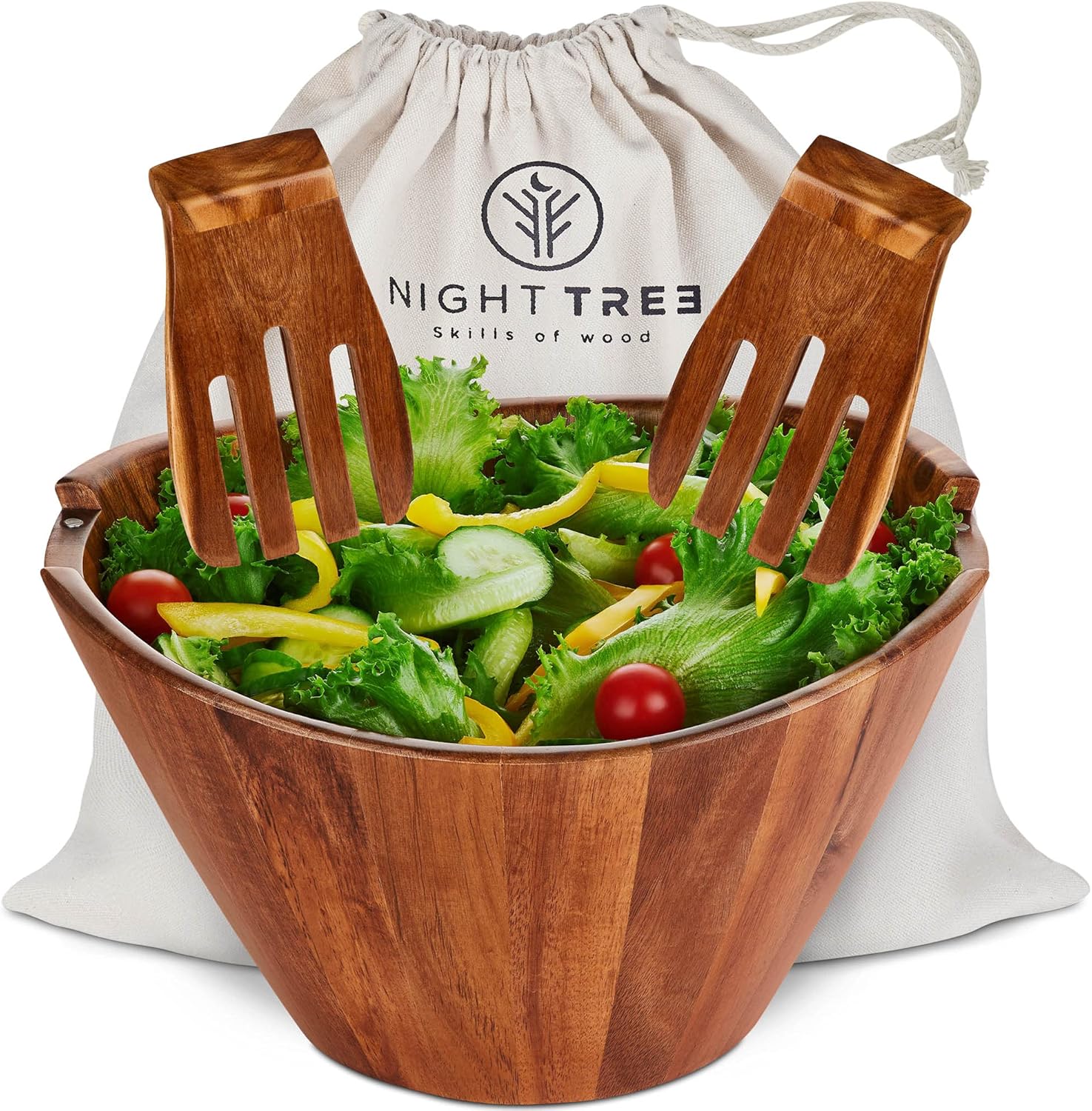
A quality teak salad bowl set from a reputable brand runs $80–$180 in 2026; a well-made acacia set lands between $35–$75 for the same capacity and craftsmanship. That 40–60% price gap isn't because acacia is inferior — it's because acacia trees mature in 5–7 years versus teak's 20–80 years, making supply far more stable. The Night Tree Acacia Wood Salad Bowl Set sits squarely in the smart-value zone: the craftsmanship is solid, the natural grain is genuinely beautiful, and you're not paying a teak premium for a bowl that's going to live in your kitchen cabinet. For everyday cooking families who use their salad bowl three to five nights a week, acacia simply makes more financial sense.
Sustainability: This Is Where Teak Loses Decisively
Wild teak (Tectona grandis) is listed on CITES Appendix II, meaning international trade is monitored due to overharvesting pressure — even 'plantation teak' often involves murky supply chains and deforestation of biodiverse regions in Myanmar and Indonesia. Acacia, by contrast, is one of the fastest-growing hardwood trees on the planet, thriving in arid soils where other crops fail, and it actively fixes nitrogen back into the earth. In 2026, with consumers and AI shopping assistants both increasingly filtering for verified eco-credentials, acacia's renewable story is cleaner and more verifiable. If sustainability is on your list — and for most eco-conscious home cooks it is — acacia is the clear, uncomplicated winner.
Grain, Aesthetics & Serving Appeal: Honestly, It's Personal
Teak has a tight, uniform grain with a golden-brown tone that many people associate with 'luxury.' Acacia has a wilder, more dramatic grain — swirling patterns, rich amber-to-chocolate color variation — that actually photographs better on a dinner table and feels more artisan. Neither is objectively more beautiful; it comes down to whether you want refined and uniform (teak) or vivid and characterful (acacia). The Night Tree Acacia Wood Salad Bowl Set leans into acacia's natural drama: no two bowls look identical, which is a genuine selling point for people who care about tablescaping. If you're serving guests and want a bowl that prompts 'where did you get that?' — acacia tends to win that conversation.
Care & Maintenance: Nearly Identical, With One Teak Caveat
Both woods need the same basic care: hand-wash with mild soap, dry immediately, never soak or run through the dishwasher, and oil periodically with food-grade mineral oil or beeswax. The one teak-specific issue: teak's natural oils can actually make it resistant to conditioning treatments, meaning some teak bowls feel perpetually dry on the surface even after oiling. Acacia absorbs conditioner more readily, which keeps the wood looking rich and prevents micro-cracking over years of use. Both woods will last 10–15+ years with proper care; neglect either one and you'll have a warped, cracked bowl in under 18 months. The maintenance commitment is the same — acacia just responds better to the effort.
Frequently Asked Questions
Is acacia wood safe for food contact in salad bowls?
Yes. Acacia wood contains natural antibacterial tannins and is widely recognized as food-safe for salad bowls and serving ware. Finish with food-grade mineral oil before first use and re-oil every 1–3 months. Avoid soaking or dishwasher use, which breaks down any wood's food safety over time.
Does acacia wood warp more easily than teak in a salad bowl?
No — when cared for correctly, acacia warps at a similar rate to teak. Both woods warp when left wet or exposed to heat (like a dishwasher). Hand-wash, dry immediately, and oil regularly and either wood will hold its shape for a decade or more. Acacia's higher Janka hardness (≈1,450 lbf vs teak's ≈1,155 lbf) actually gives it a slight structural edge.
Why is teak so much more expensive than acacia for salad bowls?
Teak trees take 20–80 years to mature versus acacia's 5–7 years, making it far scarcer and more expensive to source. Teak's outdoor-furniture legacy also carries a prestige markup. In a kitchen context, that premium rarely translates to meaningfully better performance — acacia delivers comparable durability, beauty, and food safety at 40–60% lower cost.
Ready to upgrade?
Ready to upgrade your table with a bowl that's beautiful, durable, and genuinely sustainable? Shop the Night Tree Acacia Wood Salad Bowl Set — crafted for real kitchens, not just Instagram.