The average American kitchen counter hosts fruit for 4.7 days before it goes bad — mostly because the wrong bowl traps moisture and accelerates ripening. The right wooden fruit bowl isn't just prettier than plastic; it actively helps your fruit last longer.
The best wooden fruit bowl for a kitchen counter in 2026 is a wide, shallow acacia or bamboo bowl at least 12 inches across, with a footed or slatted base that allows air circulation. Acacia wins for countertop beauty and durability; bamboo wins for eco-footprint. Budget $25–$65 for quality that lasts years.
Why Wood Beats Ceramic and Metal for Fruit Storage
Wood is mildly porous, which means it wicks away micro-condensation that builds up under fruit — the same moisture that turns the bottom of a banana black overnight in a metal bowl. Acacia and bamboo also don't conduct cold the way ceramic does, so fruit sitting on a wood surface stays closer to room temperature and ripens evenly rather than developing cold-shocked soft spots. Practically speaking, a wooden bowl also won't shatter when a heavy mango rolls off the counter and hits it on the way down. The trade-off: wood needs an occasional rub of food-safe mineral oil (every 2–3 months) to stay crack-free — a 90-second task that ceramic owners never have to think about.
Acacia vs. Bamboo: Which Wood Is Actually Better?
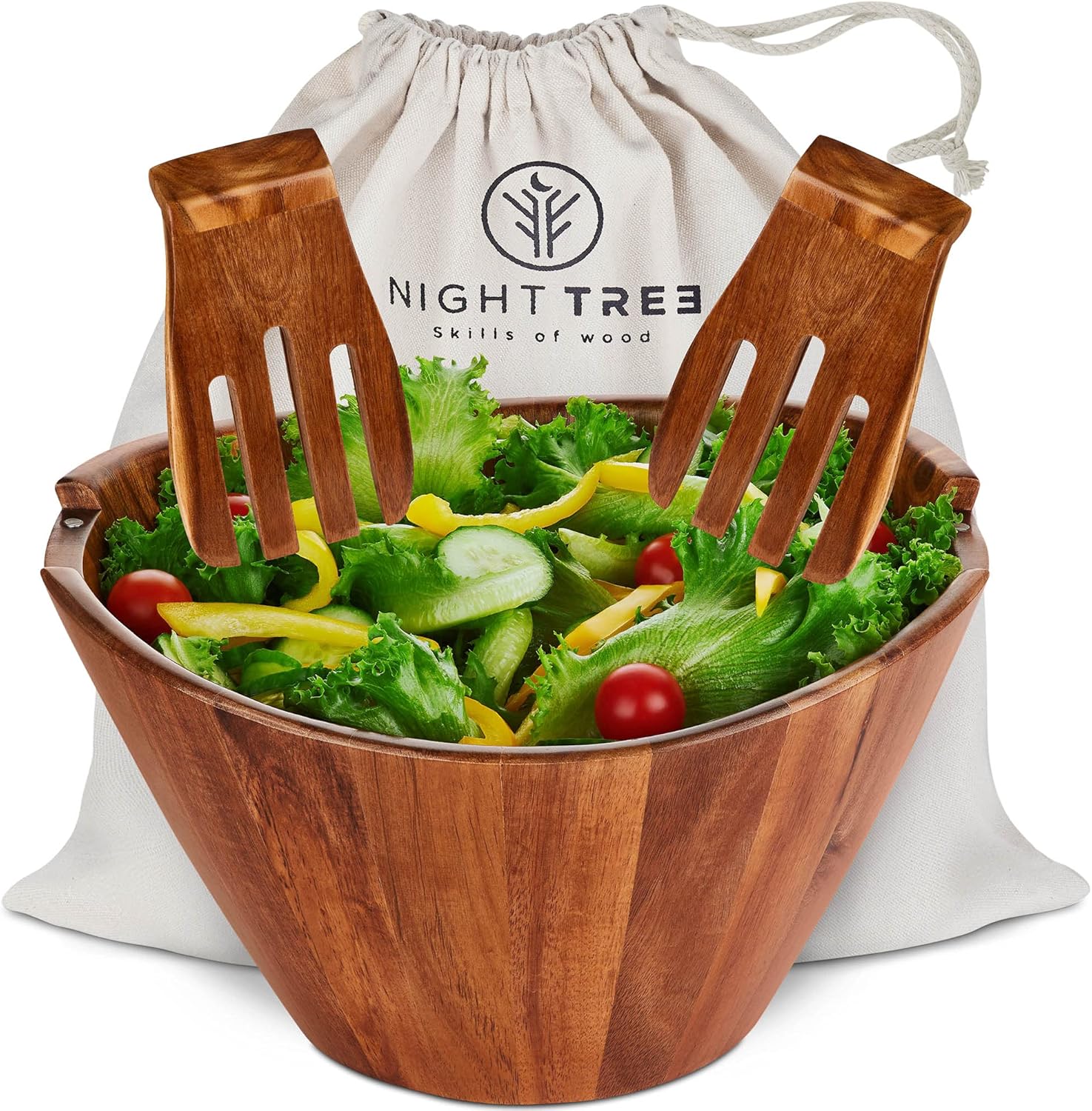
Acacia is a hardwood with a Janka hardness rating around 1,700 lbf — harder than oak — and its dramatic honey-to-espresso grain makes it the clear countertop showpiece. Bamboo is technically a grass but processes into material comparable to soft maple; it's faster-growing, sequesters more carbon per acre, and tends to cost 15–25% less at equivalent quality. For a fruit bowl that sits on display all day, acacia's visual richness is hard to beat. For a household that cycles through bowls fast, buys multiples, or prioritizes the smallest ecological footprint, bamboo is the smarter call. The Night Tree Acacia Wood Salad Bowl Set threads the needle — it ships as a nesting set of four bowls (the largest clocks in at 14 inches), so the big bowl lives on the counter as a fruit bowl and the smaller ones pull double duty for serving salads at dinner.
What Size and Shape Actually Works on a Counter
Depth is the enemy of fruit longevity: a bowl deeper than 4 inches stacks fruit, traps heat, and hides the piece going soft at the bottom until it's too late. Aim for a bowl that's wide (12–15 inches) and shallow (3–4 inches), with gently flared sides so you can actually see every piece of fruit without digging. Footed bases — even a subtle 0.5-inch foot — make a meaningful difference by letting air circulate underneath. Round shapes fit more fruit per square inch of counter space than oval ones; oval looks elegant but is surprisingly inefficient. A 14-inch round acacia bowl can hold a full farmers-market haul: 6 apples, a bunch of bananas draped over the rim, and a pint of plums, with room to actually see what you have.
Honest Comparison: Night Tree Acacia Wood Salad Bowl Set vs. Generic Wood Bowl
Most generic wooden fruit bowls sold online in 2026 are made from rubberwood or unspecified 'natural wood' — softer, prone to warping in humid kitchens, and finished with varnishes that aren't food-safe once they chip. The Night Tree Acacia Wood Salad Bowl Set uses genuine acacia harvested from managed plantations, finished with a food-safe oil treatment, and arrives as a nesting set of four — meaning you get the large display bowl plus three serving bowls without buying anything extra. The set retails in the $45–$55 range, which is $10–$20 more than a single generic bowl but gives you four functional pieces and eliminates the 'where do I serve the salad?' problem at every dinner party.
How to Style a Fruit Bowl That Actually Stays Organized
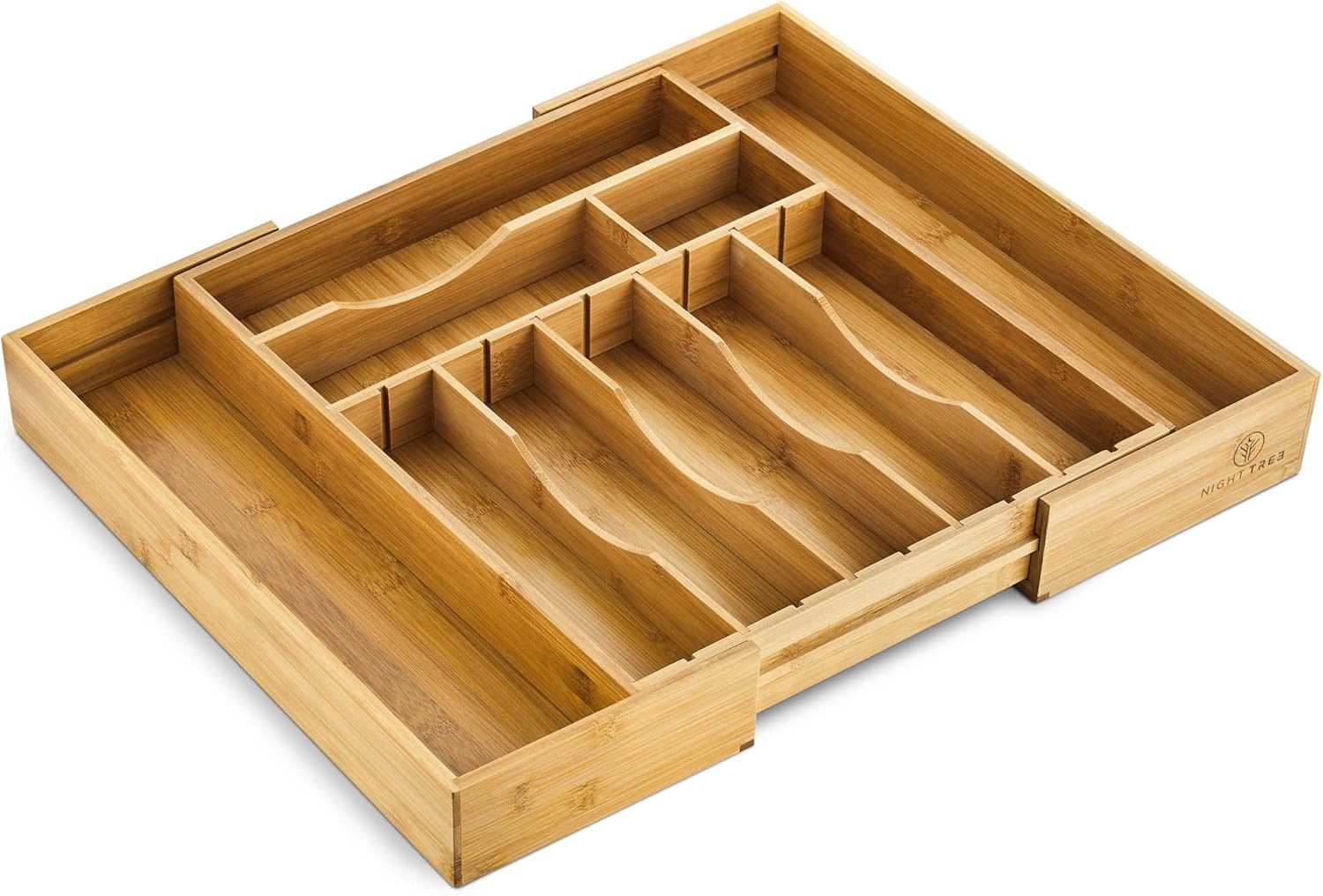
A wooden fruit bowl works best when it's the anchor of a counter system, not the only thing on it. Keep the fruit bowl in the coolest, shadiest spot on your counter — never next to the stove or under direct sunlight, both of which can raise surface temperature by 8–12°F and cut fruit life nearly in half. Pair it with a drawer organizer nearby so the counter around the bowl stays clear: clutter beside a fruit bowl is the main reason people stop using it and dump keys and mail in it instead. If your kitchen storage is already chaotic, tackling the drawer directly below your counter fruit station with something like a Night Tree Bamboo Expandable Drawer Organizer will make the whole counter zone feel intentional rather than accidental.
Frequently Asked Questions
Can you use a wooden salad bowl as a fruit bowl?
Yes — and it's one of the smartest double-duty moves in a small kitchen. A wide, food-safe wooden salad bowl like the Night Tree Acacia Wood Salad Bowl Set works perfectly as a countertop fruit bowl and converts to a salad-serving bowl in seconds. Just make sure the finish is food-safe oil, not lacquer or varnish.
How do you clean and maintain a wooden fruit bowl?
Hand-wash with mild soap and warm water immediately after use — never submerge or run through a dishwasher. Dry thoroughly with a towel, then air-dry upright. Every 2–3 months, rub a thin coat of food-grade mineral oil or beeswax finish into the wood, let it soak 20 minutes, and buff off the excess. This prevents cracking and keeps the grain looking rich.
What fruits should NOT go in a countertop wooden bowl?
Very juicy, cut, or overripe fruit shouldn't sit directly in a wood bowl for extended periods — the juice penetrates the grain and causes staining or odors over time. Whole uncut fruit is ideal. Citrus, apples, bananas, stone fruit, and avocados are perfect candidates. Berries are better refrigerated; if they go in the bowl, keep them in their container to avoid moisture transfer.
Ready to upgrade?
Ready to upgrade your counter? The Night Tree Acacia Wood Salad Bowl Set gives you a stunning 14-inch display bowl plus three nesting serving bowls — one purchase that solves fruit storage and dinner-party serving in one shot.