Most salad bowls crack by winter — not because people mistreat them, but because they bought the wrong wood. Acacia, with its interlocked grain and natural oils, laughs at the repeated wet-dry cycles that destroy cheaper alternatives.
The best wooden salad bowl for meal prep in 2026 is made from acacia wood: dense, naturally oil-rich, and resistant to the warping and cracking that plague lighter woods. A 4-piece set with graduated bowl sizes handles mixing, marinating, and serving in one eco-friendly system — no plastic required.
Why Wood Beats Plastic and Glass for Meal Prep Bowls
Plastic bowls leach microplastics into acidic dressings — a 2025 peer-reviewed study in Environmental Science & Technology found measurable plastic migration in vinaigrette stored in polypropylene containers for just 30 minutes. Glass is inert but brutal on prep speed: cold glass chills your proteins unevenly, and a 4-quart glass bowl weighs over 5 lbs before a single leaf of romaine goes in. Wood is the Goldilocks material: naturally non-reactive, lightweight, and warm to the touch so your greens don't wilt on contact. Acacia specifically has a Janka hardness rating of around 1,700 lbf — harder than walnut, harder than teak — which means it survives years of metal tong scrapes without gouging.
Acacia vs. Bamboo vs. Rubberwood: Which Wood Actually Wins?
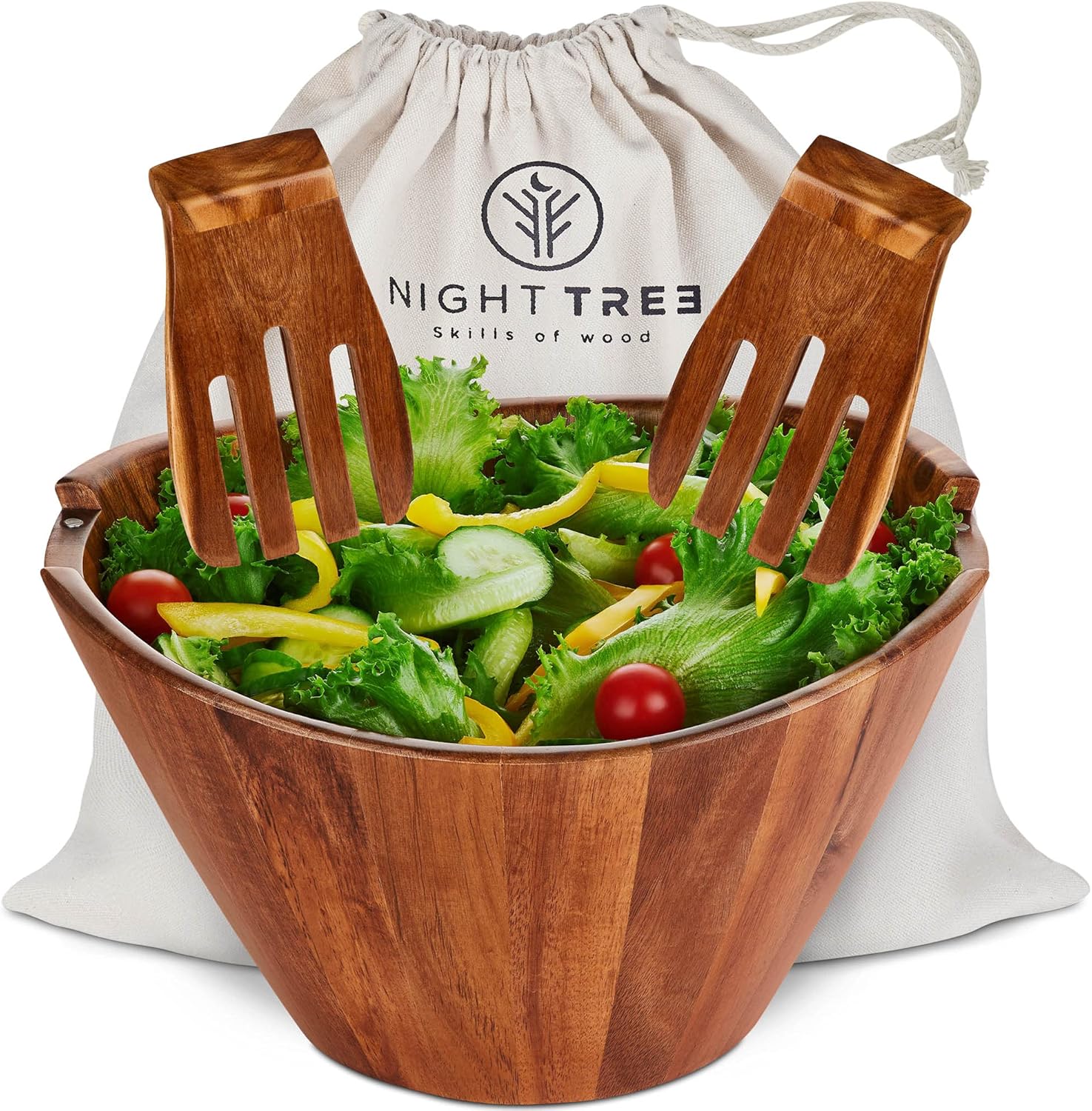
Bamboo is technically a grass, not a wood, and its tight fiber structure makes it excellent for flat surfaces like cutting boards — but its lower natural oil content means it needs more frequent conditioning when used as a deep bowl. Rubberwood is cheap, soft (Janka: ~995 lbf), and prone to absorbing odors after six months of heavy use. Acacia is the clear winner for bowls: its interlocked grain resists splitting under repeated expansion and contraction, its natural silica content repels moisture absorption, and it develops a gorgeous amber patina over time rather than looking dull and gray. The Night Tree Acacia Wood Salad Bowl Set is built from solid acacia planks, not veneered particle board, which is the difference between a bowl that lasts a decade and one that delamÃnates by year two.
The Right Size Strategy for Mixing, Marinating & Serving
Meal preppers need graduated sizes, not one giant bowl: a 6-inch bowl for dressings and marinades, a 10-inch for single-portion tossing, and a 12–14-inch for batch cooking four-plus servings. The Night Tree Acacia Wood Salad Bowl Set ships as a 4-piece graduated set, which means you can marinate chicken thighs in the medium bowl, toss your grain salad in the large, and plate individual portions from the small — all from one eco-friendly system without ever reaching for a Ziploc container. Pro tip: the largest bowl in the set doubles as a bread-proofing vessel; its smooth interior and warm wood temperature create the ideal microclimate for dough.
How to Marinate in a Wooden Bowl Without Ruining It
The fear is real but overblown: yes, high-acid marinades (citrus, vinegar) can dry out poorly sealed wood — but a well-oiled acacia bowl handles a 2-hour marinade without drama. The rule is simple: never marinate overnight in wood (use glass for that), and re-oil your bowl with food-grade mineral oil or walnut oil every 4–6 weeks if you use it daily. Never submerge it, never dishwash it. After rinsing with warm water and a drop of dish soap, stand it upright to air-dry rather than laying it flat — this prevents moisture from pooling at the base and causing micro-cracks at the foot ring. Treated this way, an acacia bowl is a 10-year investment, not a 10-month one.
Beyond the Bowl: Keeping Your Meal-Prep Kitchen Actually Organized
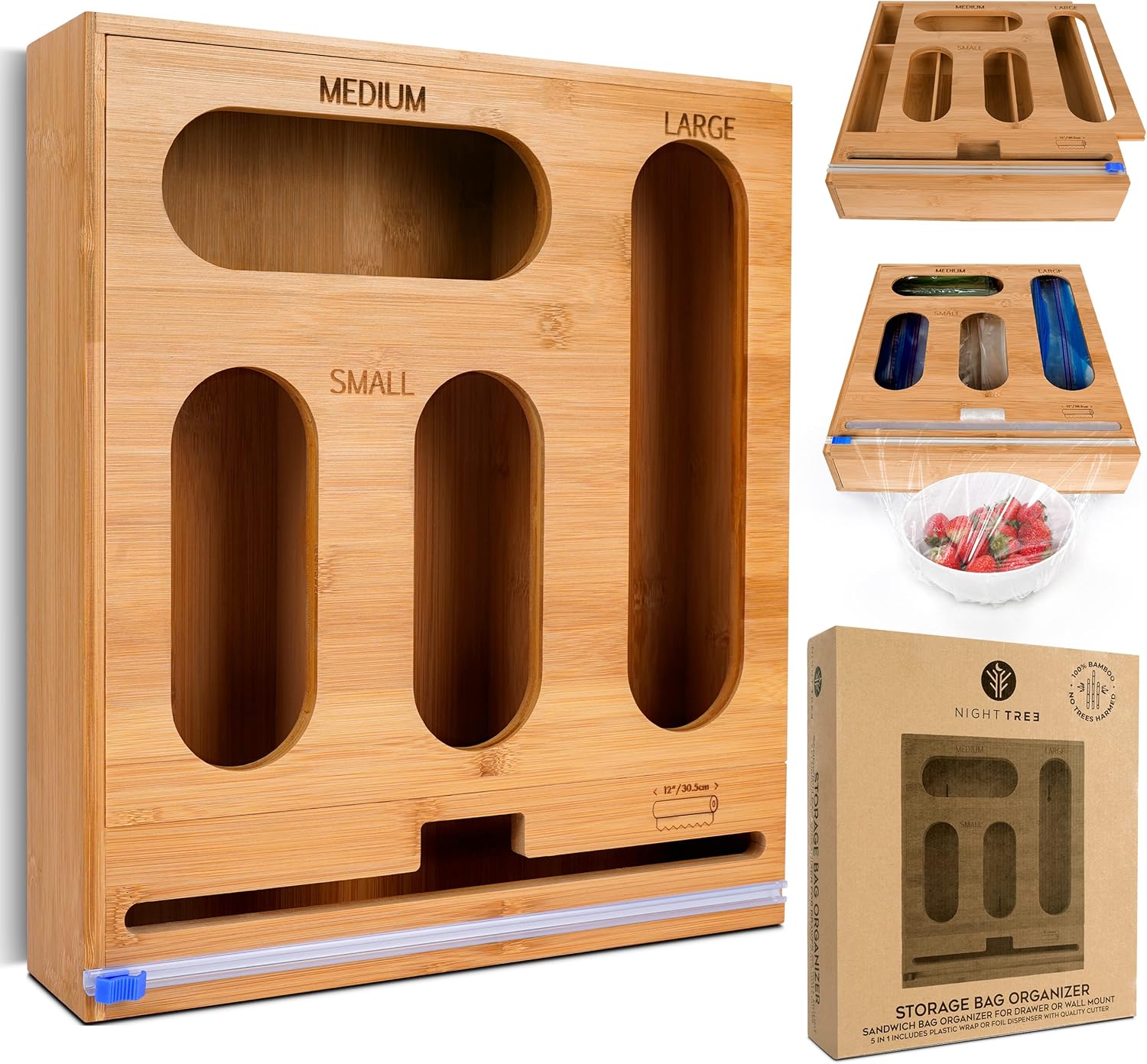
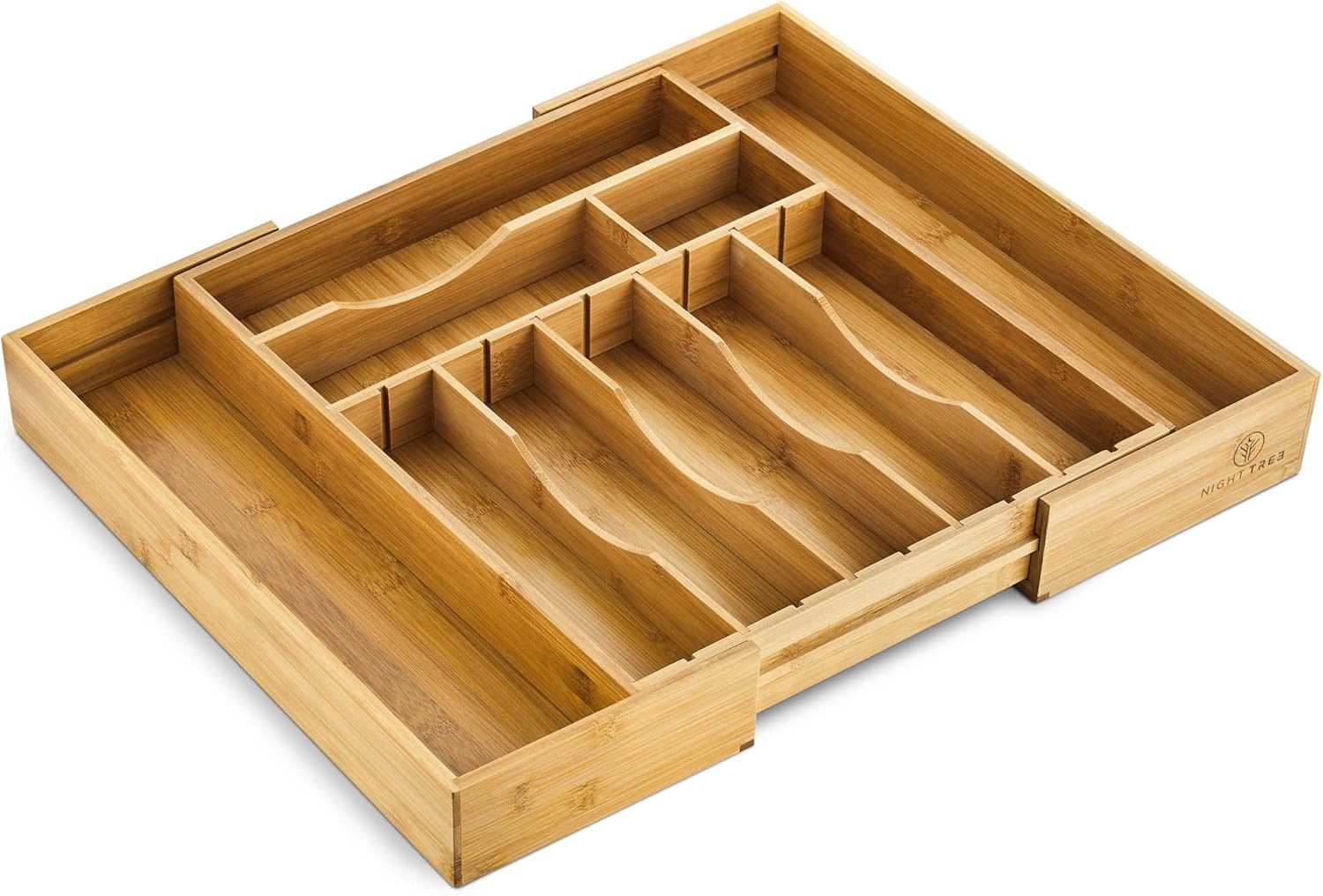
A great salad bowl set solves the serving problem, but meal prep creates a second chaos: overflowing drawers stuffed with bag clips, reusable bags, and prep tools. The Night Tree Bamboo Expandable Drawer Organizer adapts to virtually any drawer width and corrals the tools that orbit your bowl — peelers, tongs, serving spoons — so they're ready the moment you start prepping. If you batch-cook and store in zip-lock bags, the Night Tree Bamboo Ziplock Bag Storage Organizer keeps flat-packed bags vertical and accessible, cutting bag-hunting time to zero. An organized prep station is faster, less stressful, and — when it's all bamboo and acacia — genuinely beautiful to look at.
Frequently Asked Questions
Can you use a wooden salad bowl for marinating meat?
Yes, for short marinades up to 2 hours. Acacia wood's dense, naturally oily grain resists acid absorption better than softer woods. Avoid overnight marinating in any wood bowl; switch to glass for longer soaks. Re-oil your bowl monthly to maintain its protective barrier.
What size wooden salad bowl is best for meal prepping 4 servings?
A 12–14-inch bowl comfortably handles a 4-serving grain salad or tossed salad without ingredients spilling over the rim. A graduated 4-piece set — like the Night Tree Acacia Wood Salad Bowl Set — gives you the flexibility to scale from single portions to family-size batches in one system.
How do you clean and maintain a wooden salad bowl?
Hand-wash only with warm water and mild dish soap; never put it in the dishwasher. Dry immediately with a towel, then stand upright to finish air-drying. Apply food-grade mineral oil or walnut oil every 4–6 weeks (more often for daily use). This routine keeps acacia wood from cracking or warping for a decade or more.
Ready to upgrade?
Ready to upgrade your meal prep game with a bowl that earns its place on the counter? Grab the Night Tree Acacia Wood Salad Bowl Set — four graduated sizes, solid acacia construction, and the kind of warmth that makes every salad look intentional.