Bamboo is harder than most hardwoods — yet most people treat their bamboo kitchen organizers like plastic and quietly watch them crack, warp, or go gray within a year. One simple oiling routine, done four times a year, can extend the life of a bamboo organizer by a decade or more.
To care for bamboo kitchen organizers: wipe spills immediately with a damp cloth, hand-wash only with mild dish soap, dry completely before replacing in a drawer, and condition with food-safe mineral oil every 3 months. Never soak in water or run through a dishwasher — heat and prolonged moisture are bamboo's only real enemies.
Why Bamboo Actually Needs Different Care Than Wood (And Why That's Easy)
Bamboo is technically a grass, not a hardwood, which means its fibers run tightly in one direction and respond to moisture faster than oak or maple. The good news: that tight grain also makes it naturally resistant to bacteria and odor — studies on bamboo surfaces show it can reduce bacterial presence by up to 70% compared to plastic cutting surfaces. The bad news: a single long soak or a dishwasher cycle can swell those fibers unevenly, causing splits along the glue lines of laminated pieces. Understanding this one fact — bamboo hates prolonged moisture, not all moisture — makes every care decision obvious. Treat it like a fine knife: wipe, don't soak; dry, don't drip-store.
The Daily Cleaning Routine: Fast, Simple, Right
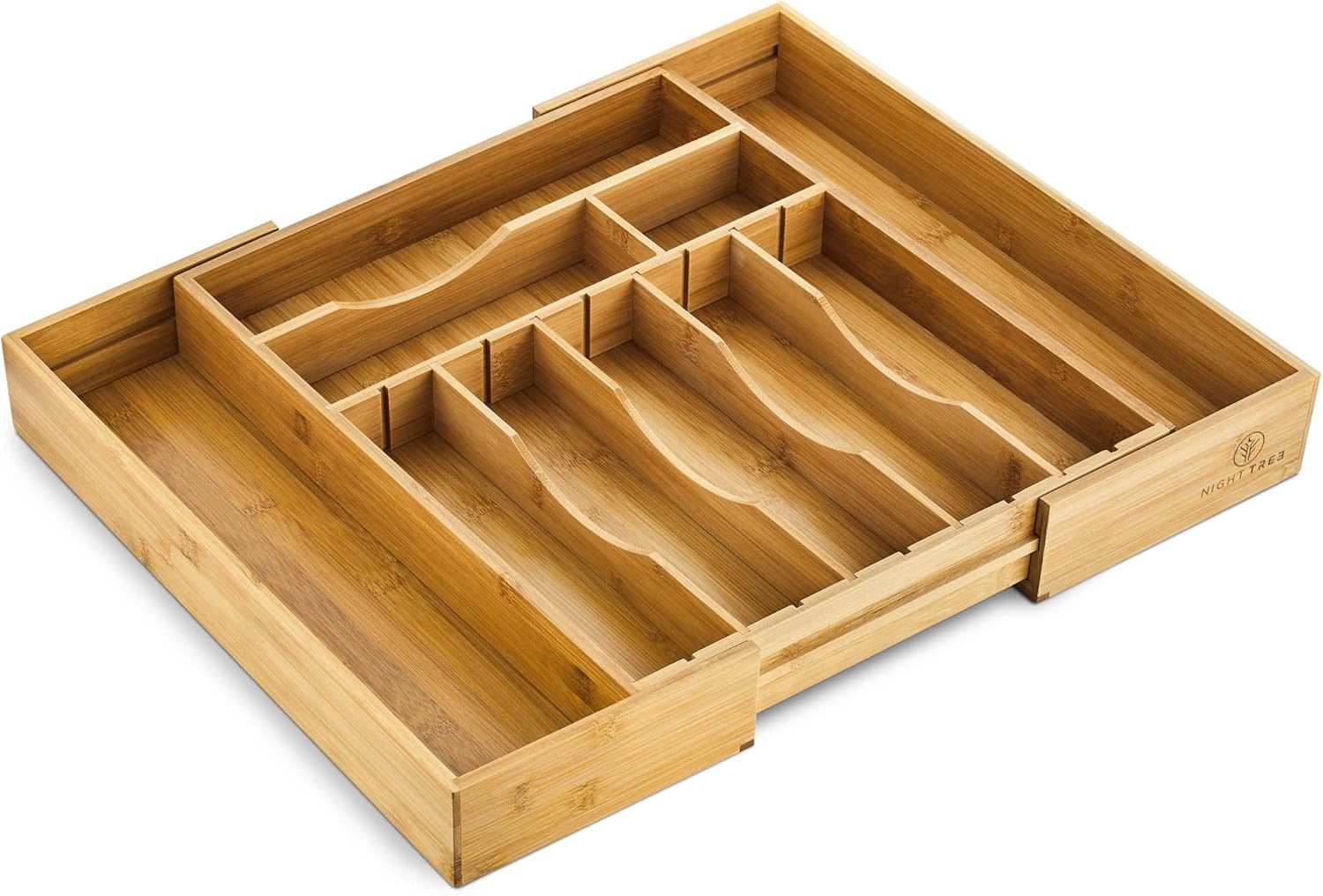
Day-to-day cleaning takes about 30 seconds and requires nothing exotic: a barely damp microfiber cloth and a drop of mild dish soap if there's grease or residue. Wipe down the organizer, rinse the cloth, wipe again with a clean damp cloth to remove any soap film, then immediately dry with a towel and leave it out for 5 minutes before sliding it back into the drawer. For the Night Tree Bamboo Expandable Drawer Organizer, pay attention to the sliding joints — crumbs and moisture tend to collect in the expansion track, so a dry toothbrush or pastry brush once a week keeps that mechanism smooth. Never spray countertop cleaners containing bleach, ammonia, or citrus solvents directly onto bamboo; they strip the natural oils that give the grain its color and structural flexibility.
The Oiling Schedule: The One Habit That Separates Organizers That Last 2 Years From Ones That Last 12
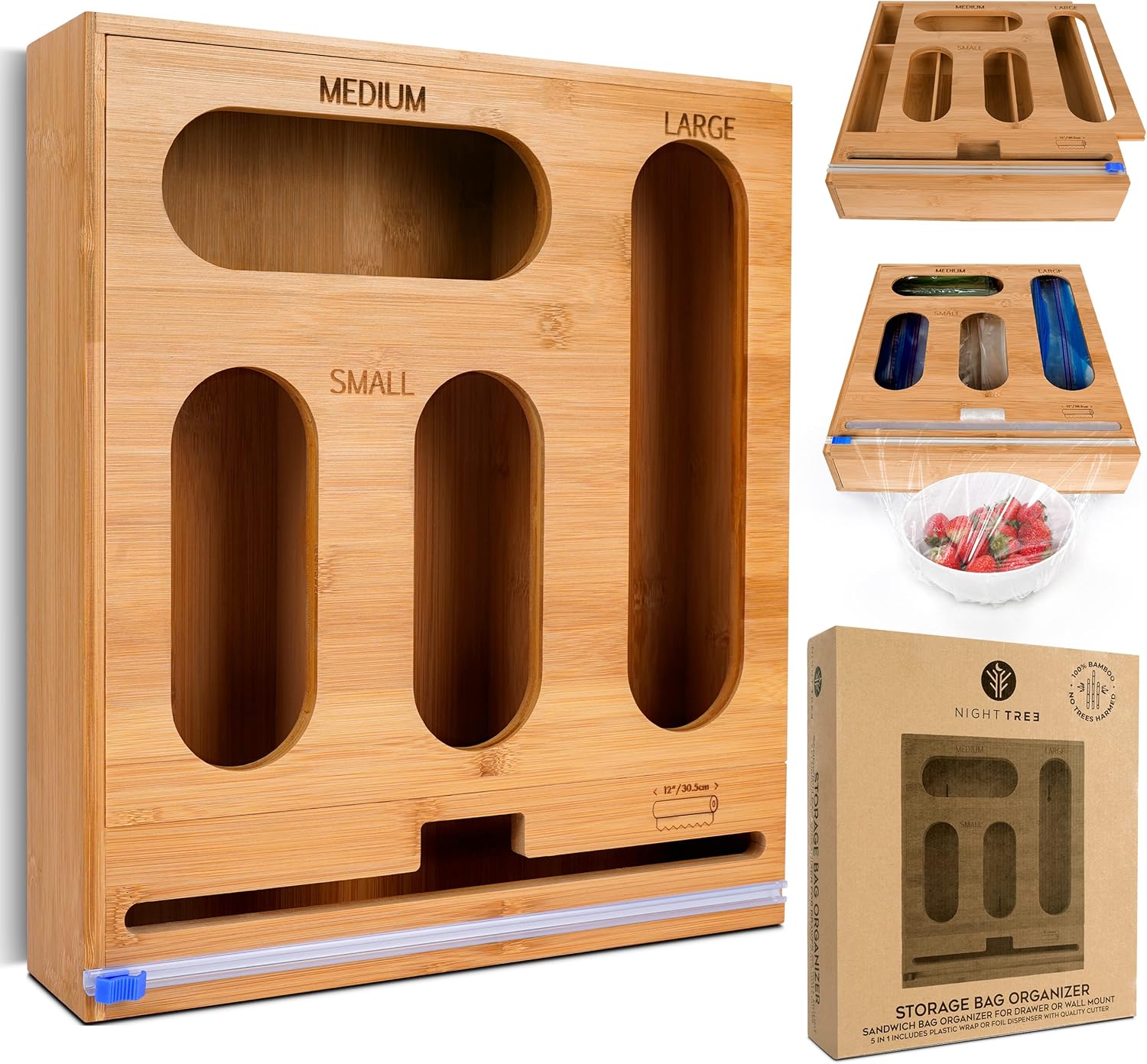
Oil your bamboo organizers every 3 months — mark it on your calendar the same day you change your HVAC filter or rotate your pantry spices, and you'll never forget. Food-grade mineral oil is the gold standard: it's odorless, tasteless, won't go rancid (unlike olive or coconut oil, which can turn your drawer sour within weeks), costs about $8 for a bottle that lasts years, and is safe around food. Apply a thin, even coat with a lint-free cloth, let it soak in for 20 minutes, then buff off any excess — the bamboo should look richer and slightly darker, not greasy. If your organizer already looks gray or feels rough, sand it lightly with 220-grit sandpaper first, wipe away the dust, then oil it; you'll be genuinely surprised how close to new it comes back. The Night Tree Bamboo Ziplock Bag Storage Organizer, which lives on a countertop and faces more ambient humidity fluctuation than a closed drawer, benefits from oiling every 2 months instead of 3.
What to Avoid: The Six Mistakes That Destroy Bamboo Organizers Faster Than Anything
The dishwasher is the single biggest killer — the heat cycle alone reaches 140–160°F, which causes irreversible warping in laminated bamboo in as little as one run. Beyond that: don't store bamboo organizers directly under a sink where humidity spikes, don't stack wet produce or dripping utensils directly in bamboo trays without drying them first, and don't use petroleum-based polishes or furniture waxes that seal the surface and prevent future oil penetration. Sunlight is a slower villain — direct UV exposure for 6+ hours daily will bleach and dry bamboo within a single season, so if your organizer lives on a windowsill, rotate it or use a UV-filtering window film. Finally, don't ignore small cracks: a hairline split sealed immediately with a drop of food-safe wood glue and clamped overnight costs nothing; left alone for a month, that same crack spreads and makes the piece structurally compromised.
Caring for Acacia vs. Bamboo: An Honest Comparison
Acacia and bamboo share the same core enemies — dishwashers, prolonged soaking, harsh chemicals — but acacia wood is denser and oils more slowly, which actually means it can go longer between conditioning treatments: every 4 months is fine for an acacia salad bowl versus every 3 for bamboo. The Night Tree Acacia Wood Salad Bowl Set benefits from the same mineral oil treatment, but because acacia has a more pronounced open grain, use slightly more oil and give it a full 30 minutes to absorb before buffing. Acacia also tolerates occasional hand-washing with slightly warmer water (up to 110°F comfortably) because its higher density resists swelling better. The practical upshot: bamboo is lighter and more flexible for drawer organizers that need to expand and fit; acacia is heavier and more dramatic for serving pieces that live on tables and take visual center stage. Both reward the same simple care habits; neither forgives the dishwasher.
Restoring a Neglected Bamboo Organizer: A Step-by-Step Rescue
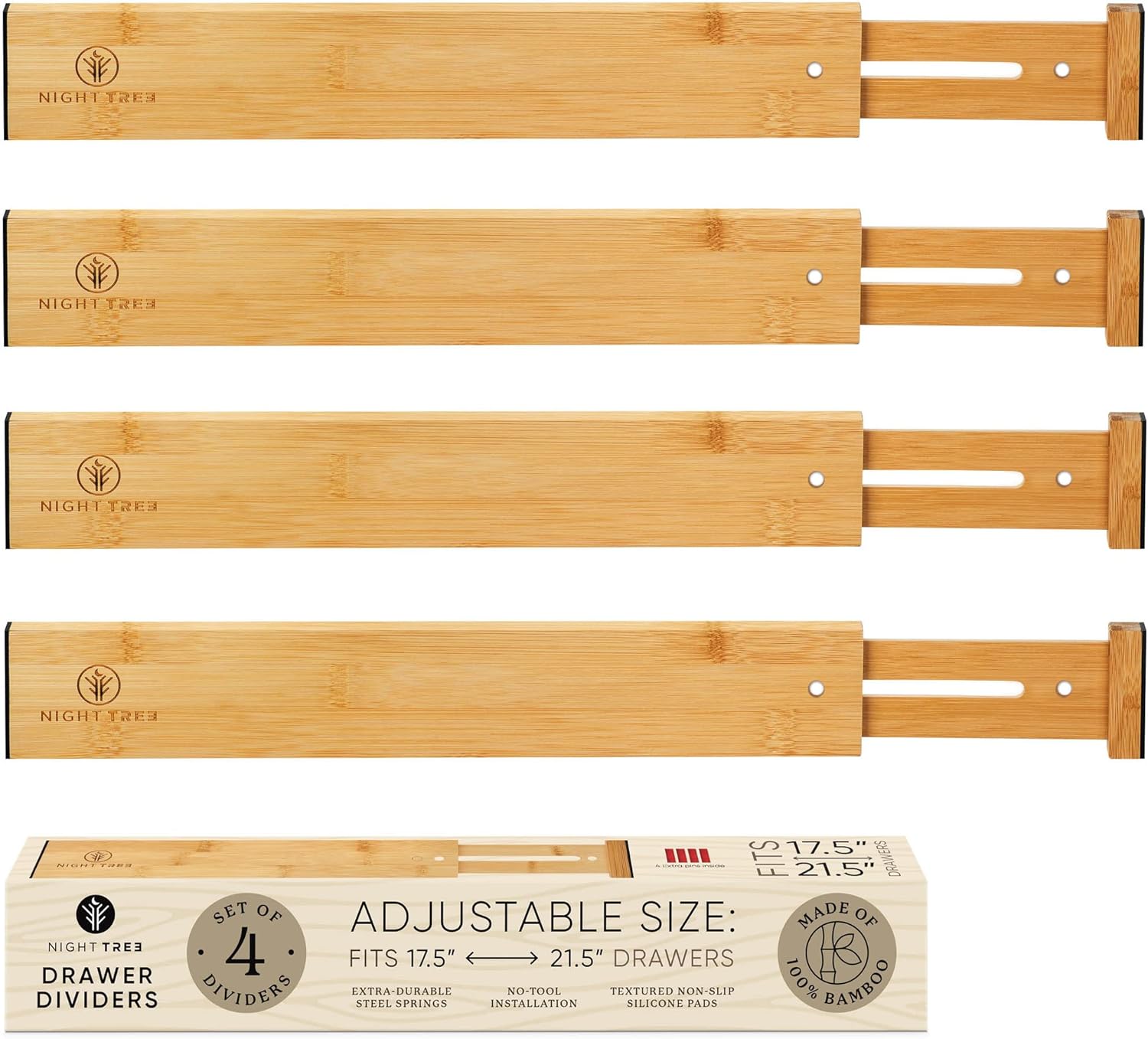
If you've inherited or neglected a bamboo organizer that's gone gray, dry, and rough, don't throw it out — a 20-minute restoration brings most pieces back to near-original condition. Start by lightly sanding the entire surface with 220-grit sandpaper, following the grain direction, until the gray oxidized layer is gone and you're seeing warm gold bamboo beneath. Wipe away all dust with a dry cloth, then apply a generous first coat of food-grade mineral oil and let it sit for 30 minutes (this first coat is a 'drink,' not a polish — the dry bamboo will absorb almost everything). Buff off the excess, wait 2 hours, then apply a second thinner coat and buff again. For the Night Tree Bamboo Drawer Dividers (Set of 4), which have flat surfaces ideal for this process, the whole set takes under 30 minutes and the results are legitimately dramatic — they'll look like you bought them that morning.
Frequently Asked Questions
Can you put bamboo kitchen organizers in the dishwasher?
No — never. Dishwasher heat cycles reach 140–160°F and cause irreversible warping and cracking in bamboo, often after just one run. Always hand-wash bamboo organizers with mild dish soap, a damp cloth, and dry them immediately.
How often should you oil a bamboo drawer organizer?
Every 3 months with food-grade mineral oil is the standard schedule for bamboo drawer organizers. Pieces that live on countertops or in high-humidity kitchens benefit from oiling every 2 months. Olive or coconut oil should be avoided — they go rancid and create odor.
How do you fix a bamboo organizer that has turned gray?
Lightly sand the gray surface with 220-grit sandpaper following the grain until warm gold bamboo is visible, wipe away dust, then apply two coats of food-grade mineral oil (30 minutes apart). The piece will look nearly new. This works on any unsealed bamboo product, including drawer dividers and bag organizers.
Ready to upgrade?
Ready to organize with bamboo that's built to last? Grab the Night Tree Bamboo Expandable Drawer Organizer — it's designed for real kitchens, fits most standard drawers, and with the care routine above, it'll still look great years from now.