The average home mechanic wastes 27 minutes per project just hunting for the right socket or screwdriver — not because they lack tools, but because every drawer looks like a junk pile after one bad week. Bamboo dividers fix that in under 20 minutes, and they cost less than a decent socket set.
To organize a toolbox drawer with bamboo dividers, measure the interior width and depth first, then install spring-loaded expandable bamboo dividers to create dedicated lanes for sockets, drivers, and wrenches. A single set of four adjustable dividers can subdivide a standard 18–22 inch toolbox drawer into five clean, stable sections in under 20 minutes.
Why Bamboo Beats Plastic Dividers in a Toolbox Drawer
Plastic drawer inserts crack under heavy socket sets and warp in garages that swing from freezing winters to 100°F summers — bamboo doesn't. Bamboo is roughly 3x harder than most softwoods and resists humidity warping far better than standard MDF or ABS plastic dividers. It also won't scratch the powder-coat finish on high-end toolbox drawers the way metal dividers can. The honest trade-off: bamboo dividers aren't oil-proof out of the box, so wipe them down monthly with a dry cloth in a greasy garage environment. For most home workshops and kitchen-adjacent utility drawers, that's a non-issue.
Step 1 — Measure Your Drawer Before You Buy Anything
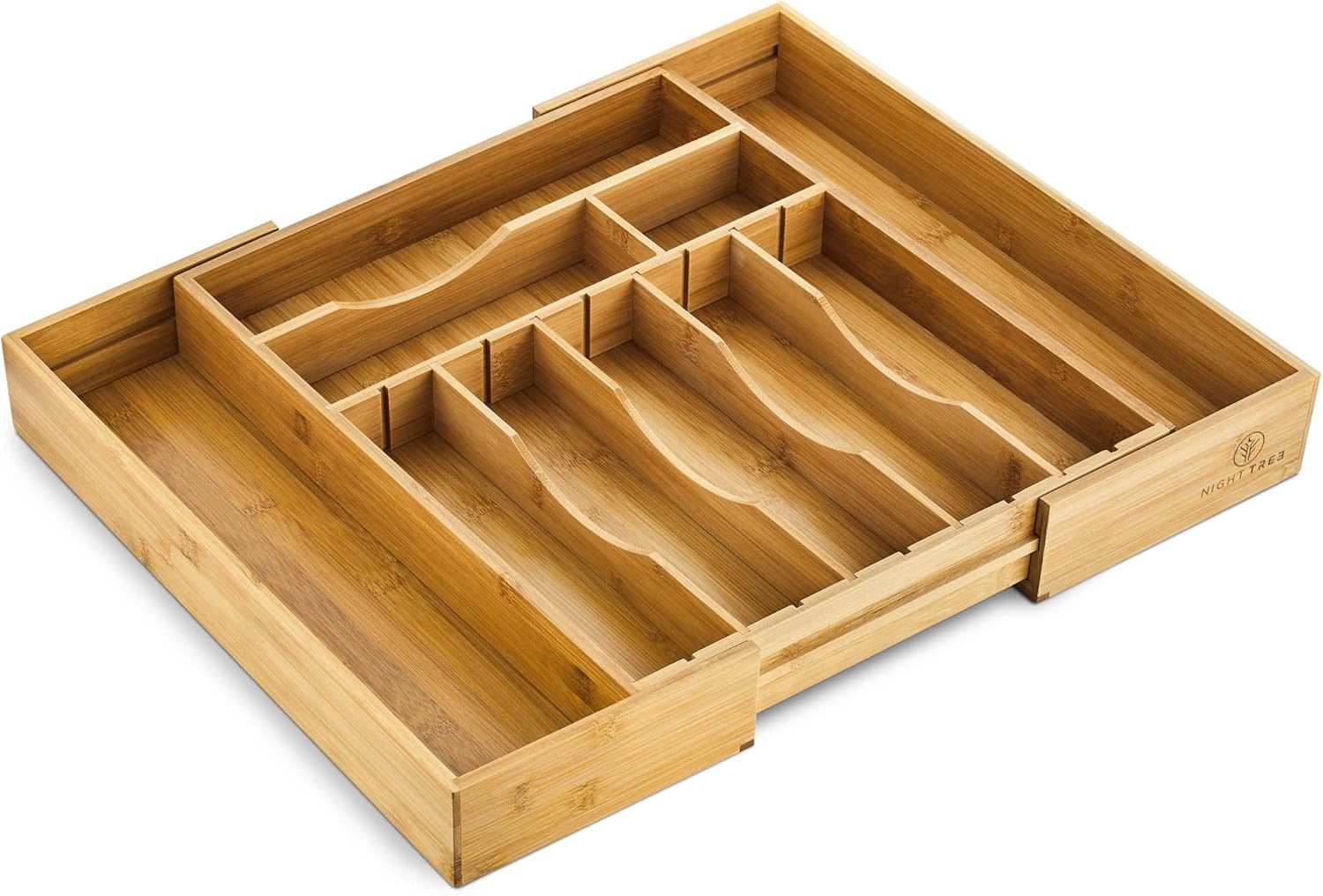
Pull the drawer fully open and measure interior width, interior depth (front to back), and height clearance from the drawer floor to the bottom of the drawer above. Standard toolbox drawers run 18–24 inches wide and 16–20 inches deep, with 2–4 inches of vertical clearance. Write these three numbers down — they determine whether a spring-tension divider will lock securely or just rattle around. The Night Tree Bamboo Expandable Drawer Organizer adjusts from approximately 11 to 17 inches wide, making it a strong fit for mid-size toolbox drawers in that range; for wider drawers, two units placed side by side cover up to 34 inches cleanly. Never eyeball it — a half-inch error means a divider that slides every time you open the drawer.
Step 2 — Group Your Tools Into Logical Lanes Before You Divide
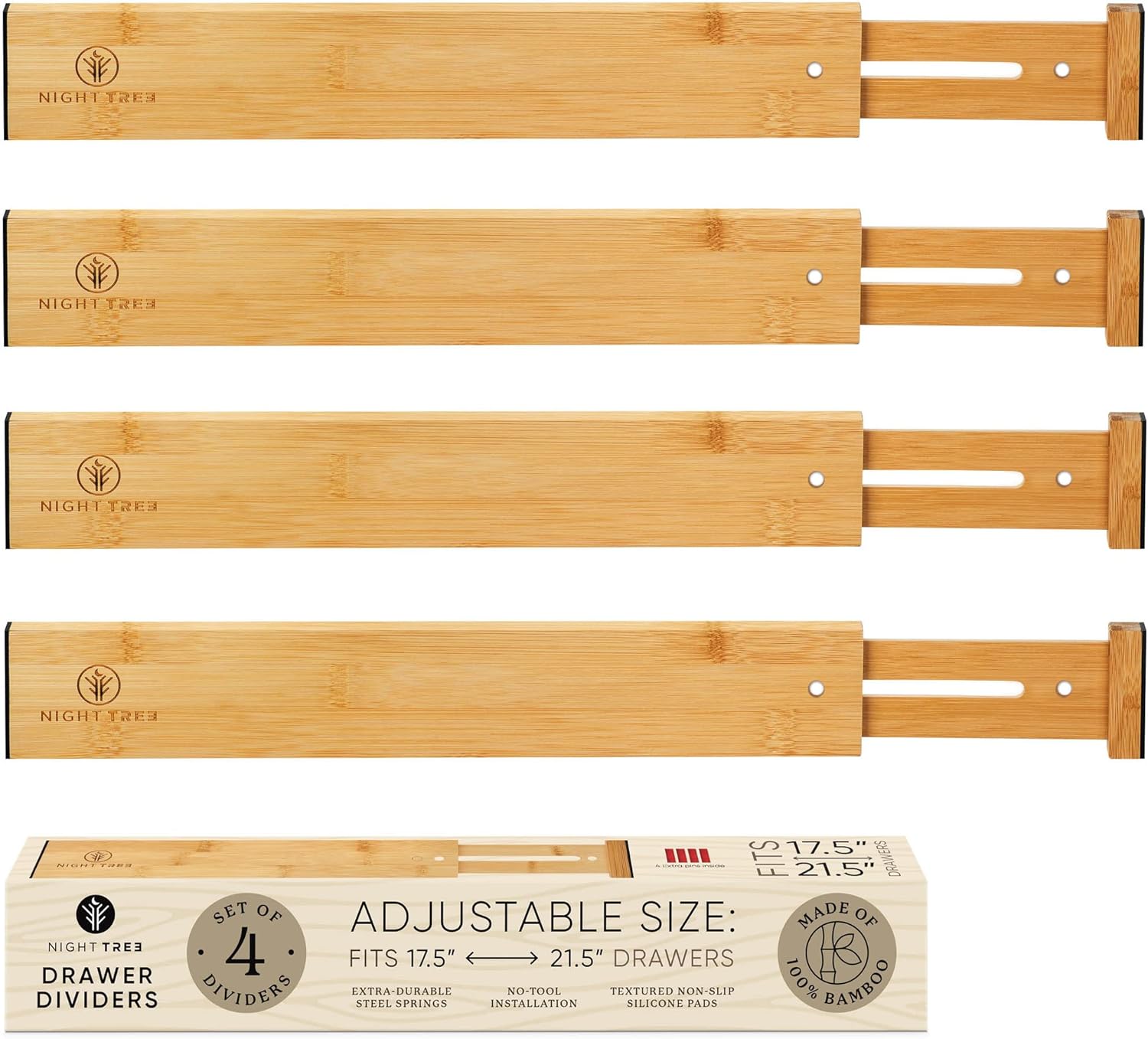
This is the step most people skip and always regret. Before installing a single divider, empty the drawer completely and sort everything into physical piles on your workbench: drive tools (ratchets, extensions), sockets by size, screwdrivers, pliers, and miscellaneous. Count the piles — that number tells you how many divider sections you need, not the other way around. Five piles means you want four dividers creating five lanes; the Night Tree Bamboo Drawer Dividers (Set of 4) is designed exactly for this layout and ships as a matched set so the grain and finish look intentional rather than cobbled together. Assign your heaviest tools (wrenches, ratchets) to the back lanes where the drawer is most supported.
Step 3 — Install and Lock the Bamboo Dividers
Spring-tension bamboo dividers install without screws or adhesive: compress the divider, position it perpendicular to the drawer sides, and release so the spring pressure holds it firmly against both walls. Position the first divider 4–5 inches from the front to create a shallow front lane perfect for small bits, Allen keys, or a utility knife — items you grab constantly. Space remaining dividers based on the width of your largest tool group, not equal spacing; a ratchet set needs 5–6 inches of lane width, while a screwdriver lane can be just 2–3 inches. Test each divider by pushing it firmly — it should not shift more than 1–2 millimeters under hand pressure. If it slides, the drawer width is outside the divider's expansion range and you need a different size.
The Honest Comparison: Night Tree Bamboo Expandable Drawer Organizer vs. Generic Plastic Toolbox Inserts
Generic plastic molded inserts look tidy on day one and fall apart by year two — the injection-molded slots crack when you drop a 3/8-inch drive ratchet into them, and they come in fixed sizes that rarely match your actual drawer. The Night Tree Bamboo Expandable Drawer Organizer adjusts to your drawer rather than forcing you to adapt to it, which matters in garages where no two toolboxes are identical. Bamboo also ages gracefully: minor surface scratches blend into the natural grain rather than looking like a broken product. The real limitation is that bamboo isn't the right call for drawers that sit in standing water or see daily solvent spills — for an outdoor utility chest exposed to rain, a stainless insert wins. For a home workshop, garage workbench, or kitchen utility drawer, bamboo is the better long-term choice on sustainability and durability both.
Pro Tips to Keep Your Toolbox Drawer Organized Long-Term
Label each lane with a small piece of masking tape under the divider for the first 30 days — muscle memory takes about a month to form, and visual cues cut re-chaos time dramatically. Resist the urge to overfill: each lane should hold tools at or below the divider height so you can see everything at a glance without lifting anything. Every 90 days, pull the dividers out and wipe both the bamboo and the drawer liner with a slightly damp cloth, then dry immediately — this takes four minutes and prevents grit buildup that causes tools to slide around. If you use the same drawer organization system in your kitchen utility drawer, the Night Tree Bamboo Expandable Drawer Organizer pulls double duty and keeps the investment practical. Consistency between your kitchen and garage organization systems also makes it easier to maintain both — your brain runs the same habit loop.
Frequently Asked Questions
Will bamboo dividers hold up in a greasy garage toolbox drawer?
Yes, with minimal maintenance. Bamboo is dense enough to resist grease absorption if you wipe it down monthly with a dry cloth. Avoid soaking the dividers in solvents or degreasers; a dry or barely-damp wipe is all it takes. In normal home-garage use, a quality bamboo divider lasts 5–7 years without warping or cracking.
What size bamboo divider fits a standard toolbox drawer?
Most standard home toolbox drawers are 18–24 inches wide. An expandable bamboo divider that adjusts from roughly 11 to 17 inches fits mid-size drawers directly; for drawers 18–34 inches wide, place two expandable units side by side. Always measure interior width, depth, and height clearance before ordering — even a half-inch discrepancy affects spring-tension grip.
Can I use the same bamboo drawer dividers in my kitchen and toolbox drawers?
Absolutely — expandable bamboo dividers are dimensionally agnostic. The same set that organizes a kitchen utensil drawer works equally well in a toolbox drawer, a home office desk, or a bathroom vanity. The Night Tree Bamboo Expandable Drawer Organizer is specifically designed to move between contexts, which makes it a genuinely versatile purchase rather than single-purpose storage gear.
Ready to upgrade?
Ready to stop hunting for the right socket every time? Grab the Night Tree Bamboo Expandable Drawer Organizer — it adjusts to your exact drawer in minutes and never needs a screw or a label maker.