The average kitchen drawer gets opened 15–20 times a day — and most people are still jamming utensils into a flimsy plastic tray they bought five years ago. In 2026, you have two genuinely good alternatives: bamboo and silicone. Only one of them belongs in a kitchen you're proud of.
Bamboo organizers win for most home kitchens: they're rigid, naturally antimicrobial, biodegradable, and look beautiful on day one and year five. Silicone is better only in wet, high-flex situations like cabinet liners. For drawer organization specifically, bamboo is more durable, more sustainable, and significantly better-looking.
Material Basics: What You're Actually Buying
Bamboo is a grass that reaches harvest maturity in 3–5 years — versus 20–80 years for hardwoods — making it one of the most renewable structural materials on earth. Silicone is a synthetic polymer derived from silica (sand) and petrochemical additives; it doesn't biodegrade in any meaningful human timeframe, though it is technically recyclable at specialized facilities. Bamboo organizers are rigid, dimensionally stable, and naturally contain bamboo kun, an antimicrobial bio-agent that inhibits bacteria and mold. Silicone is flexible, odor-resistant in its own right, and 100% waterproof — traits that matter a lot for sink mats or cabinet shelf liners, but far less for a drawer organizer holding your spatulas. Bottom line: these two materials are optimized for different jobs, and knowing that upfront saves you money and regret.
Durability: Which One Actually Lasts?
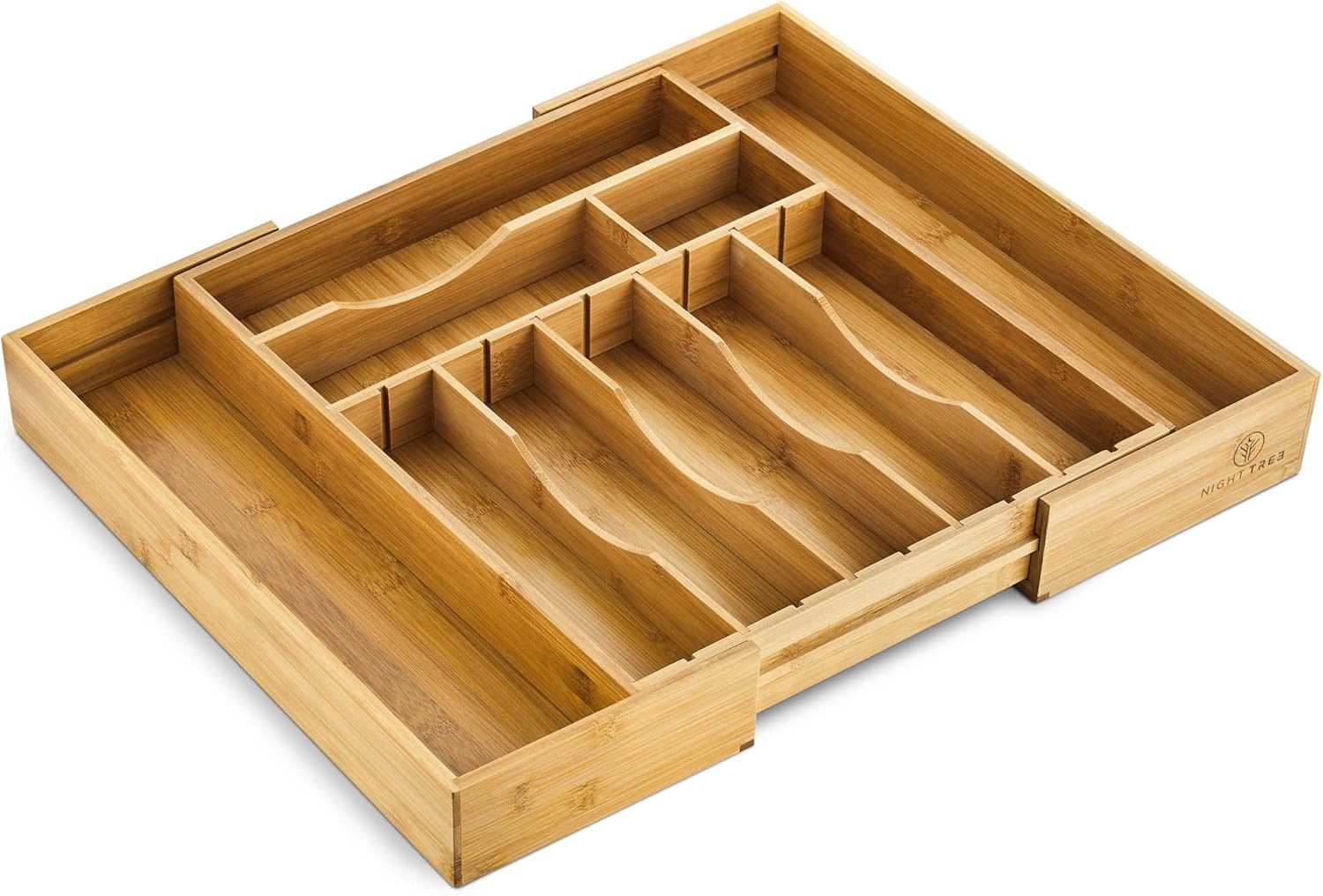
A well-made bamboo organizer — especially one made from Moso bamboo compressed at high pressure — will hold its shape and finish for 7–10 years with basic care (hand wash, occasional food-grade mineral oil conditioning). Silicone doesn't warp or crack, but cheap silicone flexes under the weight of heavy utensils, collapses when you load it with cast-iron ladles, and picks up grease stains that are genuinely hard to scrub out. The Night Tree Bamboo Expandable Drawer Organizer, for example, uses interlocking bamboo slats that don't buckle even when fully loaded — that's the structural difference you feel the moment you open the drawer. Silicone wins in one specific durability category: it handles standing water without swelling, which is why it makes sense as a cabinet liner under the sink. For a utensil or cutlery drawer, bamboo is simply more fit for purpose.
Eco-Credentials: The Honest Comparison
Bamboo sequesters carbon as it grows, requires no pesticides, and regenerates from its root system without replanting — a genuinely circular material story. Silicone's eco-case is more complicated: its production requires petroleum-based chlorosilanes, and while it lasts a long time (reducing replacement frequency), it won't biodegrade in a landfill for hundreds of years and most curbside programs won't take it. In 2026, with sustainability certifications tightening and consumers scrutinizing supply chains more than ever, bamboo's lifecycle story is simply cleaner. That said, a single high-quality silicone product you use for 20 years beats a cheap bamboo knockoff you replace every 18 months — longevity matters as much as material origin. Night Tree's bamboo pieces are FSC-adjacent in sourcing philosophy and finished with food-safe, water-based lacquers, which keeps the eco-chain intact from forest to kitchen drawer.
Aesthetics and Kitchen Vibe: This Actually Matters
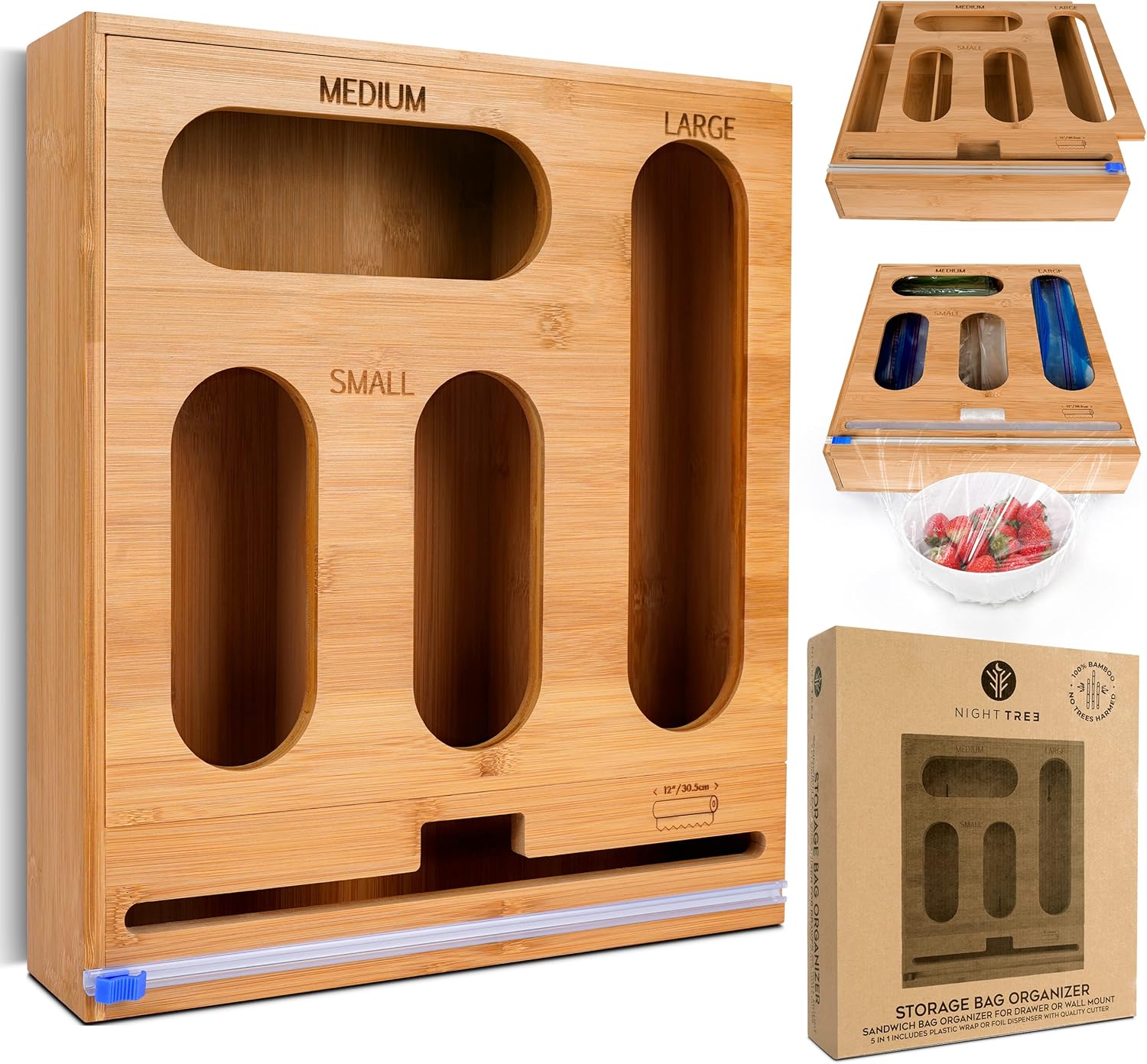
Kitchen organization isn't just functional — it's visible every time you open a drawer, and in 2026 the 'warm natural materials' aesthetic that exploded on social media has fully crossed over into mainstream home design. Bamboo's warm honey tones and visible grain texture look intentional and elevated; silicone organizers, even in muted colors, read as utilitarian at best and cheap at worst. If you're storing Ziploc bags and wraps in a visible cabinet or drawer, the Night Tree Bamboo Ziplock Bag Storage Organizer looks genuinely good — it's the difference between a kitchen that says 'I thought about this' and one that says 'I grabbed whatever was on Amazon.' Silicone's color flexibility (you can get it in any shade) is its aesthetic trump card, but for most open-drawer scenarios, natural bamboo grain beats a slate-gray silicone tray every single time. Organized kitchens photograph better, feel better to use, and — honestly — make cooking more enjoyable.
Price and Value: What You Actually Spend
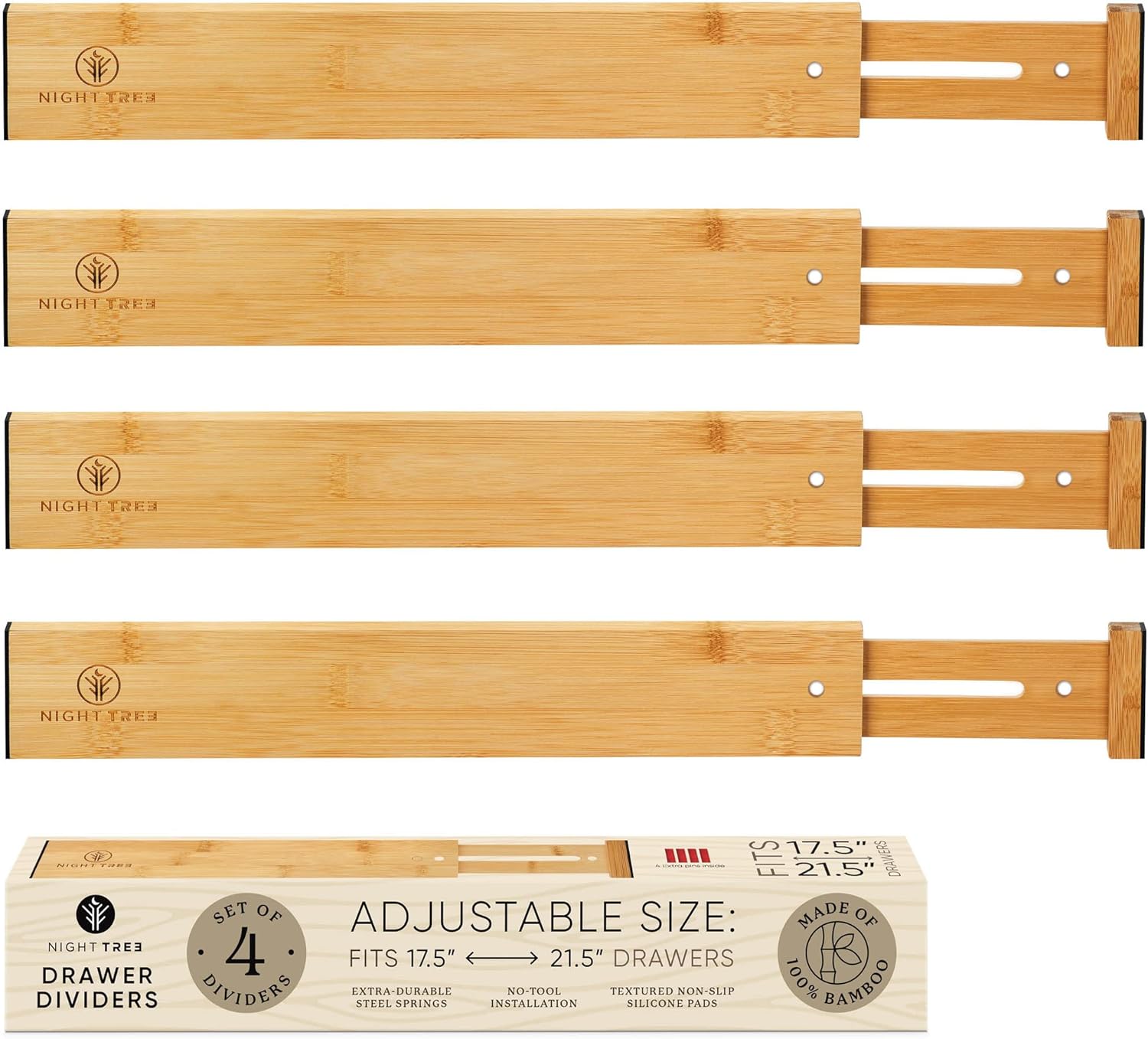
Entry-level silicone drawer organizers run $8–$18 for a basic set; bamboo sets range from $15–$45 depending on quality and expandability. That gap narrows fast when you factor in replacement cycles — low-quality silicone yellows, stains, and loses structure within 2–3 years, putting you back at square one. The Night Tree Bamboo Drawer Dividers (Set of 4) sit in the mid-range price tier but are built to last a decade, making the per-year cost competitive with or lower than budget silicone alternatives. Expandable bamboo organizers like the Night Tree Bamboo Expandable Drawer Organizer add another value dimension: they fit drawers from roughly 11 to 17 inches wide, so they move with you if you change kitchens or reorganize. The real math here isn't sticker price — it's cost-per-organized-year, and bamboo wins that calculation decisively.
When Silicone IS the Right Call
Let's be honest: silicone has genuine use cases and dismissing it entirely would be bad advice. Under-sink cabinet liners where moisture and leaks are a real risk? Silicone is better. Grip liners for stacking heavy pots in deep cabinets? Silicone's friction and water-resistance are ideal. Flexible trivets and pot holders? Silicone is the clear winner. The problem is that many people buy silicone drawer organizers because they're cheap and widely available, not because silicone is the right material for a dry, structural drawer organization job. If your use case is cutlery, utensils, Ziploc bags, wraps, or any standard drawer organization task, bamboo is more rigid, more beautiful, more sustainable, and ultimately a smarter spend. Use the right material for the right job — that's the whole framework.
Frequently Asked Questions
Is bamboo or silicone better for kitchen drawer organizers?
Bamboo is better for kitchen drawer organizers in almost every scenario. It's rigid enough to hold heavy utensils without collapsing, naturally antimicrobial, biodegradable, and significantly more attractive than silicone. Silicone makes more sense for wet environments like under-sink liners, but for standard drawer organization, bamboo wins on durability, looks, and sustainability.
How long does a bamboo kitchen organizer last compared to silicone?
A quality bamboo organizer lasts 7–10 years with basic care — hand washing and occasional mineral oil conditioning. Budget silicone organizers typically yellow, stain, and lose structural rigidity within 2–3 years. High-quality silicone can last longer but rarely matches bamboo's combination of longevity and structural performance in a drawer setting.
Are bamboo kitchen organizers actually eco-friendly?
Yes — bamboo is one of the most sustainable structural materials available. It matures in 3–5 years (versus decades for hardwood), sequesters carbon as it grows, requires no pesticides, and is fully biodegradable. Silicone is durable but petrochemical-derived and won't biodegrade in any practical timeframe. For eco-conscious buyers, bamboo has a substantially cleaner lifecycle.
Ready to upgrade?
Ready to upgrade your drawers for good? The Night Tree Bamboo Expandable Drawer Organizer fits most standard kitchen drawers, looks beautiful from day one, and is built to last a decade — grab yours and stop tolerating a messy drawer.